Where to stay in Japan: Accommodation Guide
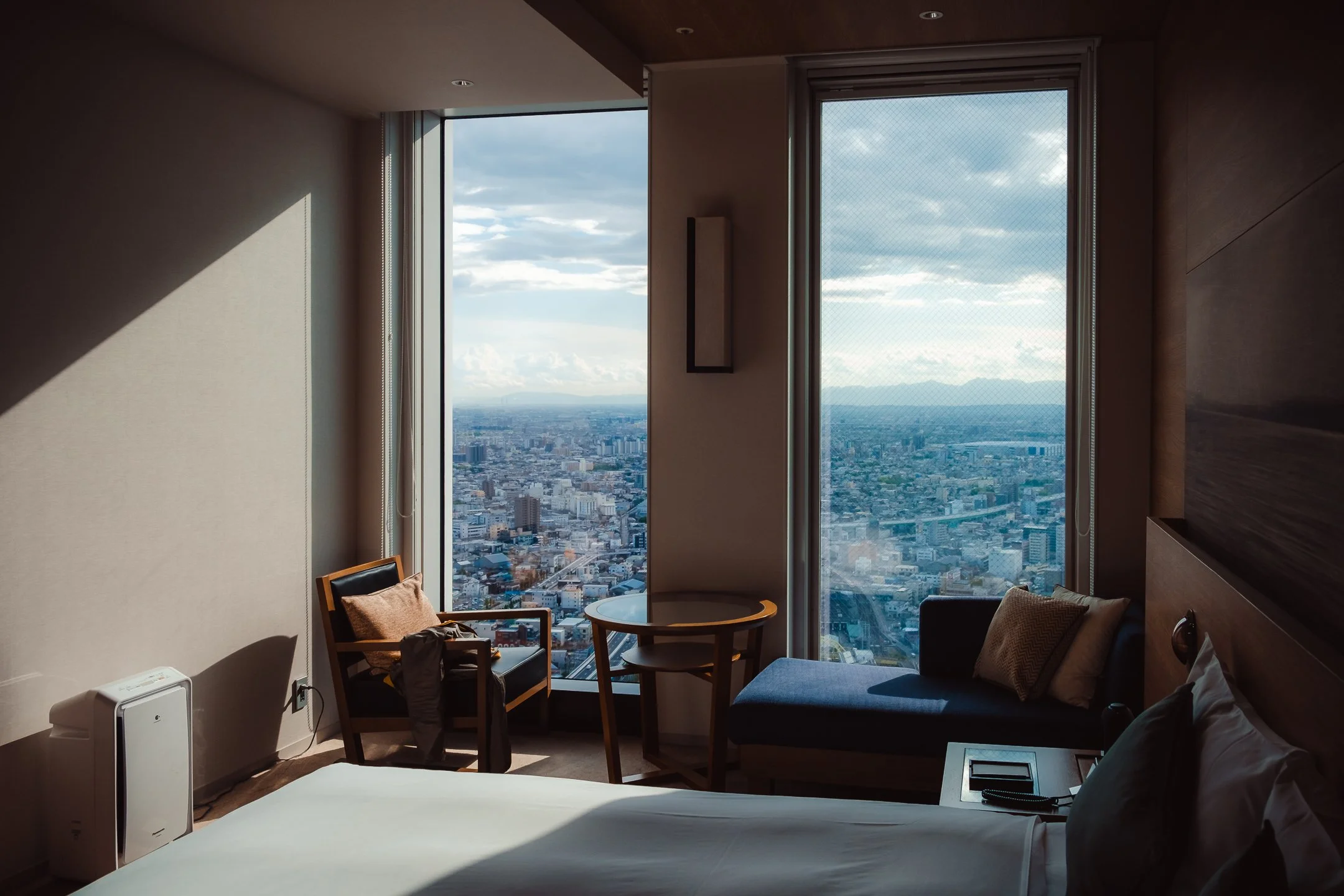
Sky-high hotel room at the Prince Hotel Sky Tower, Nagoya
What type of accommodation should I book?
As you plan your Japan trip, you'll find that there is a wide variety of accommodation types available to you. Some of them are fairly unique to Japan, or at the very least, might be uncommon in your part of the world. To help you choose where you’ll stay during your trip, let’s briefly discuss some of the merits and drawbacks of some of the varieties of lodging options you’ll likely come across.
Hotel
I don’t need to tell you what a hotel is. You’ll find plenty of regular hotels across Japan. Some of the affordable options you’ll come across are your APAs, your MyStays, and your Dormy Inns. If you’re on a budget, those three are a good starting point. But, if your budget allows for a swankier abode, the sky’s the limit, especially in a large city like Tokyo.
Business Hotel
These are hotels that cater primarily to salarymen, rather than tourists. As such, they are simple, no-frills, 1-star abodes with a low price point to match. These rooms will be quite small and spartan, but will contain all the essentials, and are a great option for the traveller who does not plan on spending any time in their hotel room, other than to sleep.
AirBnB
Personally, I would advise against renting AirBnBs. The financial argument for AirBnB has faded as they are often the same price, if not more expensive than hotels. You also miss out on the hospitality and general benefits of a hotel or traditional inn:
A concierge to hold your bags before check-in or after check-out
Amenities like laundry machines and dryers (clothes dryers are uncommon in most Japanese homes), gyms, or baths (if you're at an onsen)
Cozy hotel-provided PJs, slippers, and toiletries
Unique cultural experiences, like sleeping on futon in a tatami room, or in-room Japanese-style multi course dining
Luggage forwarding services
If your accommodations don't offer assistance with luggate transfer services, you can still to go to a Yamato Transport location and fill out the form yourself, but it’s way less convenient!
Room service (& toilet paper refills!)
Staff that can assist with calling taxis, booking reservations, or providing local recommendations
If it’s your first time in Japan, I’d especially recommend against having an AirBnB as your first accommodation. You probably don’t want to be wandering through an unfamiliar neighbourhood, looking for a possibly unmarked apartment building, and fumbling your way through confusing entry instructions, right after stepping off your 10+ hour flight into an unfamiliar country.
Finally, you never know who your neighbours will be (and older Japanese apartment buildings famously have no soundproofing). It could be that the whole apartment complex is AirBnBs, in which case you might have to contend with loud and rowdy neighbours, or you might find yourself surrounded by local residents who are none too happy about having an AirBnB in their midst.
If cost is an issue, you can typically find very reasonably priced hotel rooms. The rooms might be very small (another point for packing light!), but will be clean, comfortable, and contain all the essentials.
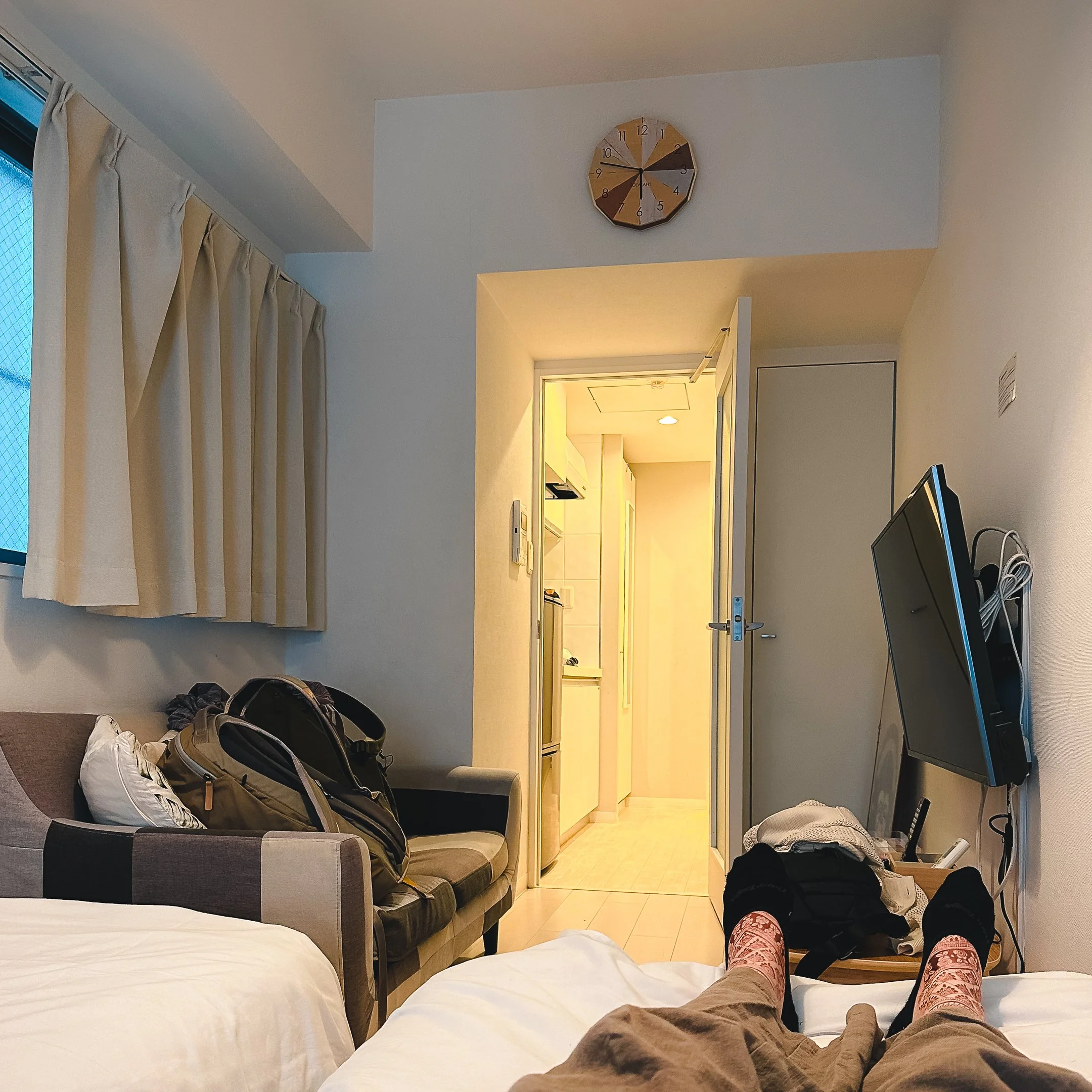
Tiny but functional AirBnB apartment in Okubo, Tokyo
Capsule Hotel
You’ve probably seen these tiny, human-sized pods on social media. Originally meant for folks who stayed out past the last train and needed a place to crash, capsule hotels have become popular with tourists. They are like hostels with more privacy: your sleeping pod is totally private, with segregated male and female sections, but the washrooms, showers, and lounge spaces are communal. They vary tremendously in terms of comfort and amenities, but either way, they are typically much cheaper than hotels and might make for a novel experience.
Be sure to look closely at reviews: some capsule pods can get extremely hot and stuffy if they don’t allow for much air circulation. Plus, you most likely won’t be able to adjust your own pod’s temperature. The fancier ones might be a little bigger, have individual TVs in each pod, and lockable storage below the bed for your items. If you aren’t too picky about your sleeping temperature, and don’t suffer from claustrophobia, then give a capsule hotel a shot! But don’t book your whole trip in capsule hotels before you’ve given them a chance - you might find that they’re really not for you.
Ryokan
A ryokan is a traditional Japanese inn. What this means in practice depends on the inn: some may be much older, and more traditional, than others, but you can expect to experience traditional Japanese hospitality during your stay, which might include some or all of the following features:
Removing your shoes upon entering the inn, and changing into wooden slippers to be worn throughout the property
Curfew hours, where you must have returned to the inn by a certain time of night
Traditional Japanese teishoku meals (typically breakfast + dinner option), which include many courses and small dishes to accompany your main, usually highlighting the local specialties and produce
Option of booking Japanese-style rooms with tatami mats and futons, or more western style rooms with beds
Public and/or private baths, particularly if in a hot spring town
Inn-provided Yukata, or Japanese-style summer kimono that can be worn around the hotel, or around town while you explore the area
Complimentary tea and local snack provided in the room
Sometimes, private gardens
I would recommend splurging at least once on a nice Ryokan stay in an onsen town so that you can experience a traditional Japanese inn. If you can bear the extra cost, try booking one with an in-room, open-air hot spring bath. That way, you can enjoy the splendour of onsen without having to bare it all to strangers in a public bath (but I'd still recommend giving that a try too, eventually! When in Japan, after all).
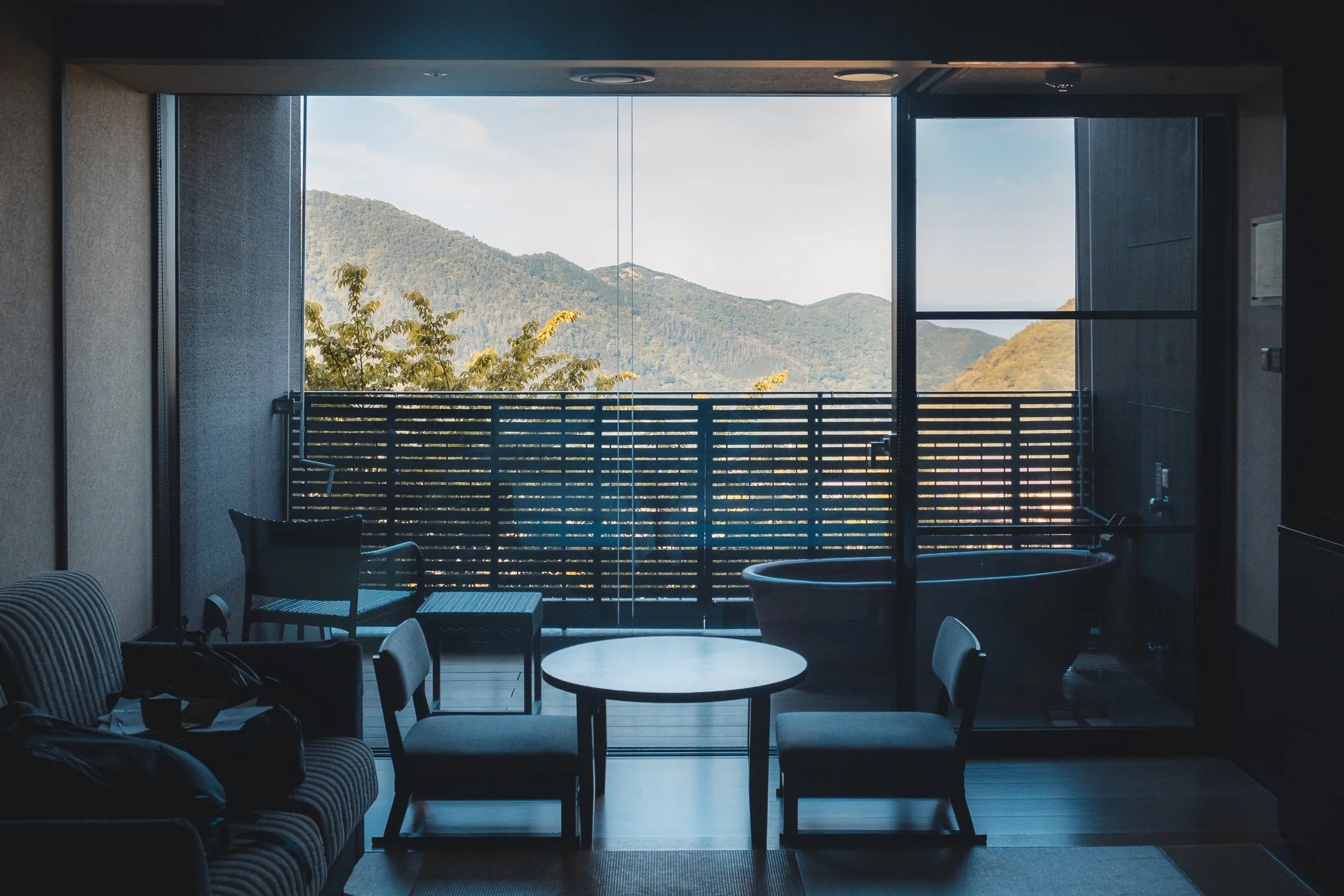
Ryokan room with a private open-air bath at Kowakien Ten-yu, Hakone
Minshuku
This is a guesthouse style of accommodation that is usually family-run. Think of it as a Japanese bed and breakfast (and supper), since they’ll also usually feed you! This type of accommodation cannot be missed, in my opinion. A lot of old minshuku, especially in more remote areas, are unfortunately starting to close down, since younger generations are less likely to take up the mantle after their aging parents.
We stayed at a Minshuku in Tsumago-juku, a small historic postal town on the Nakasendo trail. We got to learn a lot about the beautiful traditional Japanese home, which had been in the family for over a century. We experienced delicious Japanese home cooking with the other travellers who were staying the night, and our hosts were exceptionally kind and accommodating.
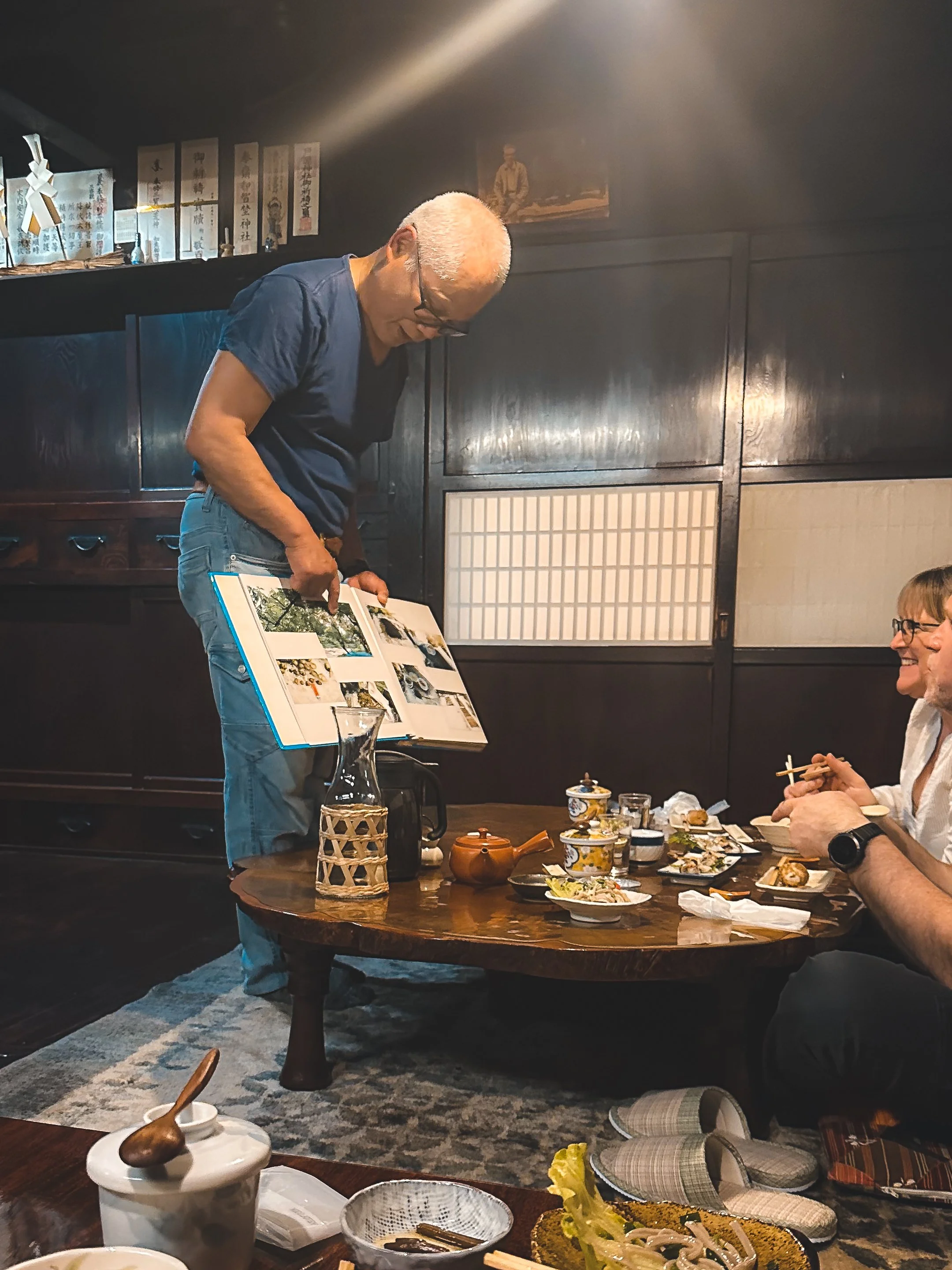
Our host recounts stories during supper at Koshinzuka Minshuku, Nagano
Shukubo
Another unique type of accommodation in Japan are shukubo, or temple lodgings. These types of accommodations are in Buddhist temples, and are run by monks. Stays here often include dinner and breakfast, and meals are typically "shojin ryori": buddhist cuisine that is usually completely free from animal products. The monks at these temples are not hospitality employees, but are actual practicing monks, so don't expect the type of "Customer is God" service that you might find at other accommodations. Rather, you should book a night at a temple lodging if you are interested in Buddhist temples and practices, as the monks will typically invite you to observe during their morning ceremonies. The most popular place to book a temple stay is in Koyasan in Wakayama, and the lodgings here will be accustomed to having foreign guests.
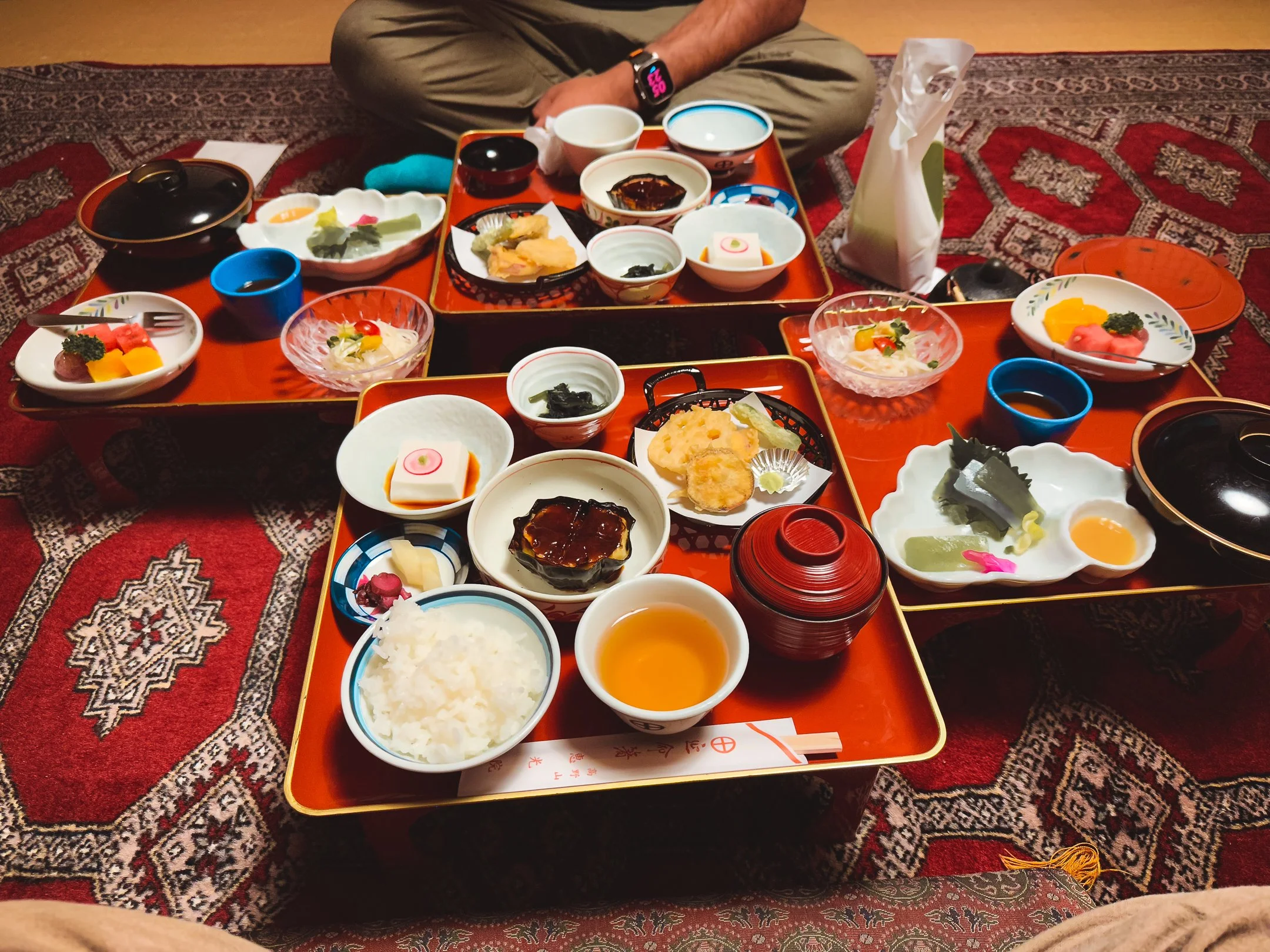
A plant-based buddhist feast at Eko-in Temple, Koyasan
How to book
For regular hotel accommodations, I use Booking.com for the most part, and so far I have not had any bad experiences. Often, they will offer free cancellation until very soon before your stay. I like this, because it allows me to be a lot more fluid as I travel. For example, I really enjoyed my time in Matsumoto during my last trip, so I opted to stay an extra night and cancelled my upcoming hotel stay in another city. I’m sure other booking sites offer similar perks; I tend to stick with Booking.com though since at this point I’ve accumulated enough points to get some nice discounts!
Lately, more and more traditional types of accommodations, like ryokan and shukubo, have started appearing on these mainstream booking sites. For others, especially guesthouses, you might have to email them. But keep in mind, for most guesthouses, and many traditional inns, you may have to pay in cash regardless of how you book. So make sure to pull out cash well beforehand, as there may not be any ATMs available near the property.
Finally, remember to always book hotel rooms for the number of people that will be staying there. Often, Japanese hotels charge on a per-person basis.
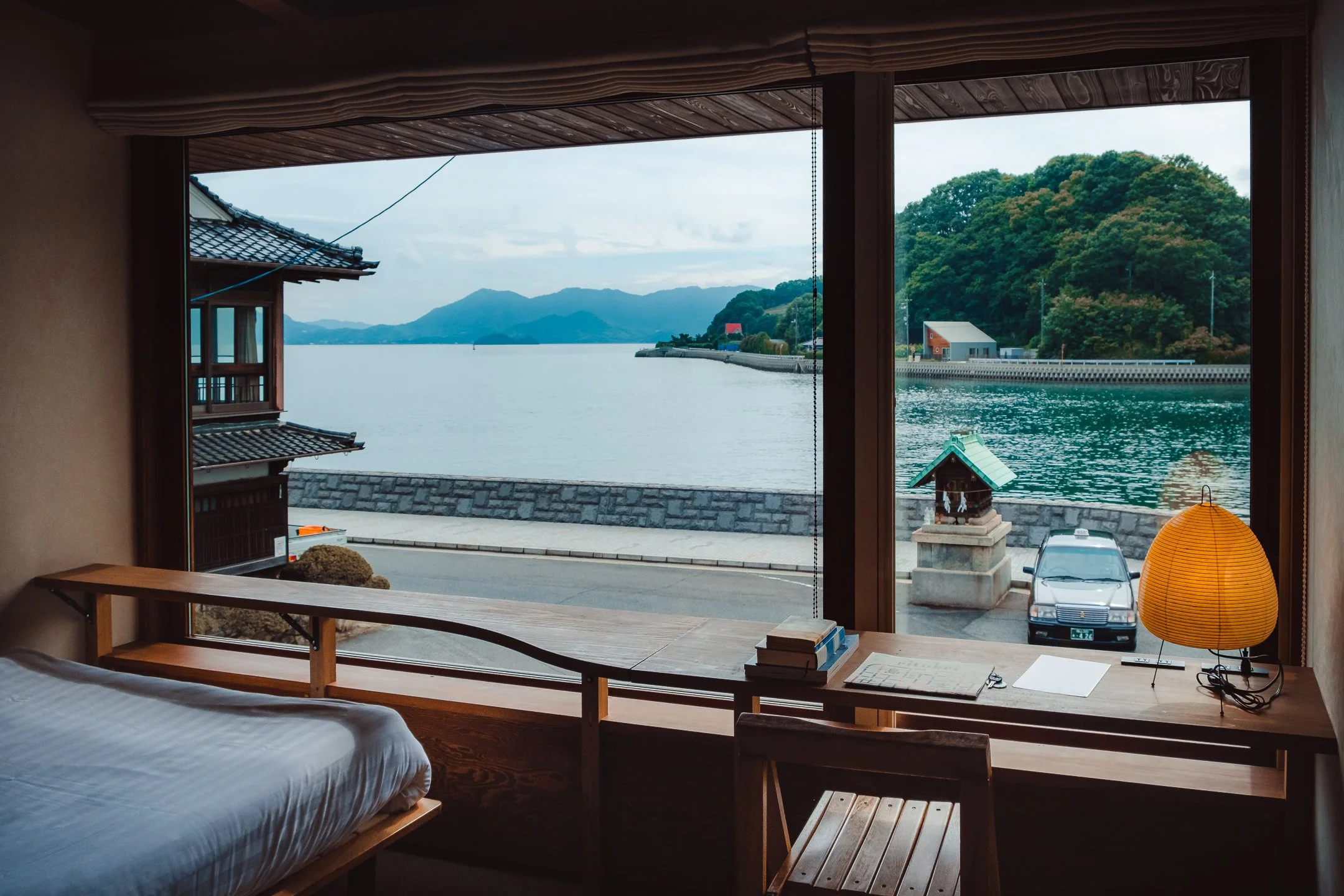
Sea-facing room at SOIL Setoda, Onomichi