Trip Report: Naoshima & Teshima Art Islands

Explore the Setouchi region
Nestled in Japan’s Seto Inland Sea, Naoshima and Teshima are two small islands that are known primarily for hosting a variety of art museums, art houses, and open-air art installations. Both are located in Kagawa prefecture, and are part of a growing trend of islands in the Setouchi area collaborating with architects and artists to draw tourists and art admirers alike to their shores. Naoshima and Teshima are the most popular of the “art islands”, and have a large variety of interesting exhibits to explore. These two islands were one of the highlights of our latest trip to Japan, and I seldom see them in travellers’ itineraries. By sharing this trip report, I hope that more visitors to Japan discover these lesser-known gems!
Trip duration
Our journey through these two islands took the bulk of 2 days, staying overnight on Naoshima. It is not feasible to fit both islands into a day trip, though I suppose you could do one island in a day, keeping the ferry schedule and museum hours in mind. This trip is also easily extensible if you’d like to visit more art islands, like Inujima or Ogijima. The much larger and livelier Shodoshima island, known for its olive production and many lovely beaches, is also nearby and has many art exhibits of its own.
Know before you go
Bring cash: Most places on the islands will only take cash, including the ferry terminals, so at the very least you will need enough change to pay your fares. There is one 7-11 on Naoshima island (and it is in fact the only convenience store on the island), so in a pinch you may be able to take out money there, but I wouldn’t risk it! There are no convenience stores on Teshima.
Reserve accommodations: The busiest time of year on the art islands is probably during summer, as well as during cherry blossom season. You will want to secure your accommodations far in advance. We stayed in a villa at Sparky’s House, which is a guesthouse accommodation conveniently located near Miyanoura port. Our suite came equipped with a kitchen, and offered complimentary bike rentals (though, we didn’t find out until we checked in and had already rented bikes, so we didn’t take advantage!).
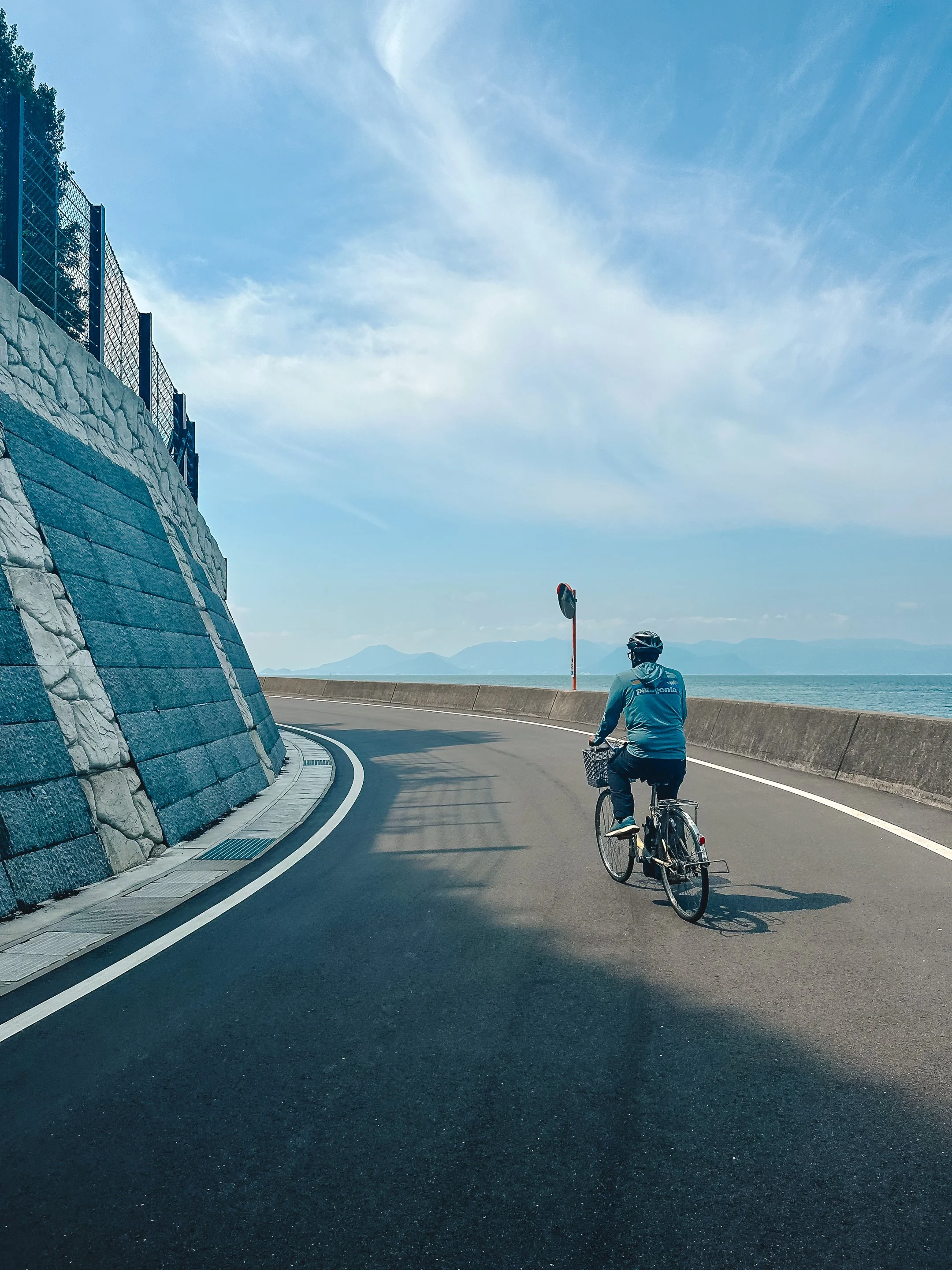
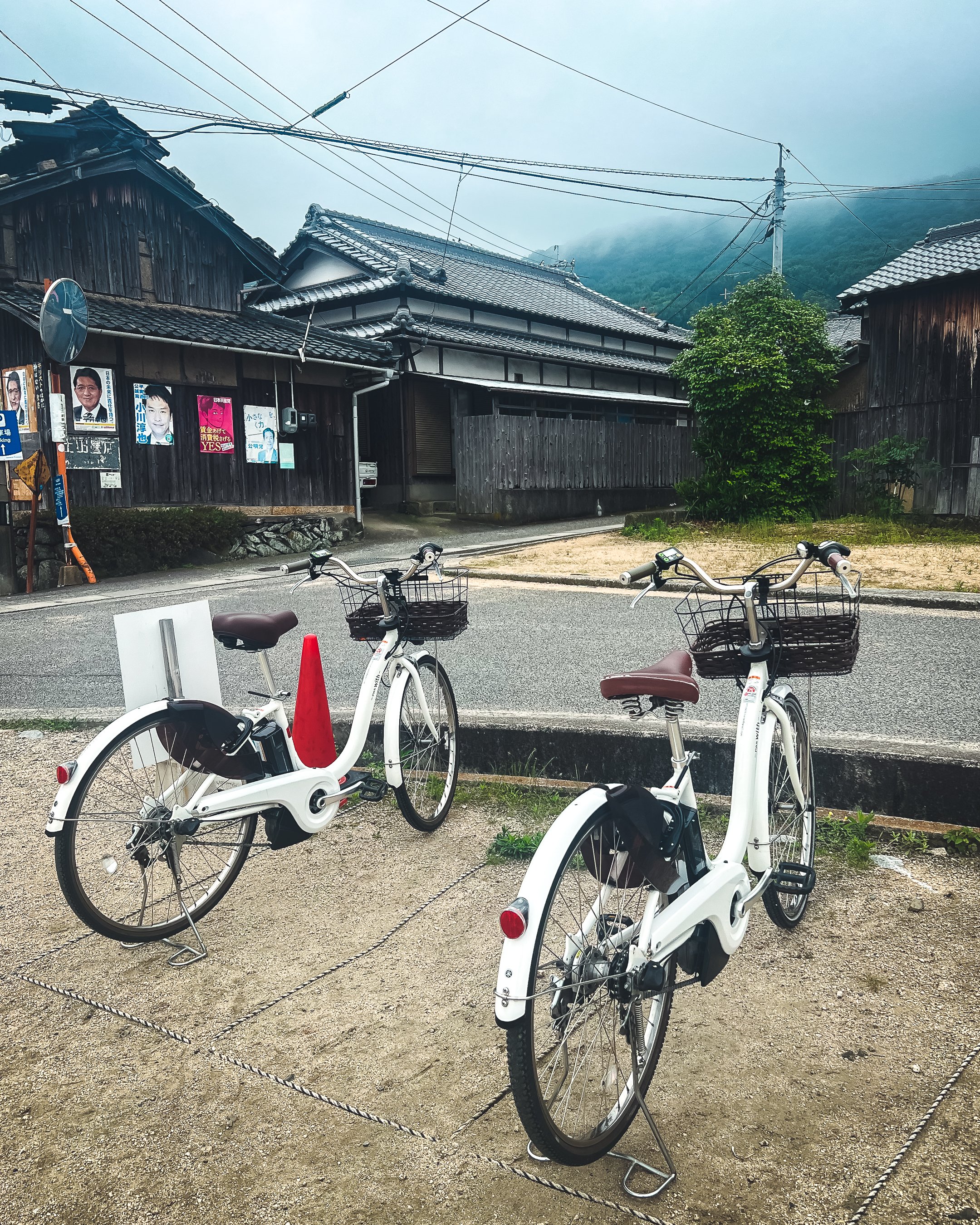
Secure an e-bike: Both Naoshima and Teshima have a town bus route. However, I think the best way to enjoy the islands is to rent an e-bike, so that you aren’t beholden to the bus schedule or route. There are bike rental companies on both islands, but check with your accommodations to see if they offer complimentary bike rentals. Either way, make sure you either reserve a bike in advance online, or arrive to the islands early, because you will want to secure an electric bike as both islands are quite hilly.
Plan your ferry itinerary: Your ability to get on and off the islands is of course dictated by the ferry schedule! Plan out your route so that you know where you need to be and when, and try not to plan on leaving on the last ferry of the day, since missing it for whatever reason (too many people, getting lost, ferry issues) would throw quite the wrench in your plans. Give yourself some buffer time.
Check the artwork calendar: On Naoshima, many of the museums and art houses are closed on Mondays. On Teshima, many of them are closed on Wednesdays and Thursdays (and some exhibits have longer closures than others). There may also be maintenance periods to be mindful of. When planning your trip, pay careful attention to the artworks schedule and plan accordingly.
Book museum admission beforehand: Many of the museums on the art islands require prior online reservations. When I went, it wasn’t that busy and my ignorance of this fact was not an issue, but this could have easily backfired and ruined our trip!
Getting there
Assuming you are starting from Honshu (Japan’s main island), to get to Naoshima you will need to head to Uno port, south of Okayama city. We started our morning in Himeji, and took the bullet train to Okayama station. From there, you can either take a bus or two trains. Both options take about the same amount of time, but we prefer trains, so we took the Kojima Line train from Okayama Station to Chayamachi station, and from there transferred to the Uno line and rode it all the way to Uno Station. Once there, exit the station and make the short walk to the ferry port ticket counter.
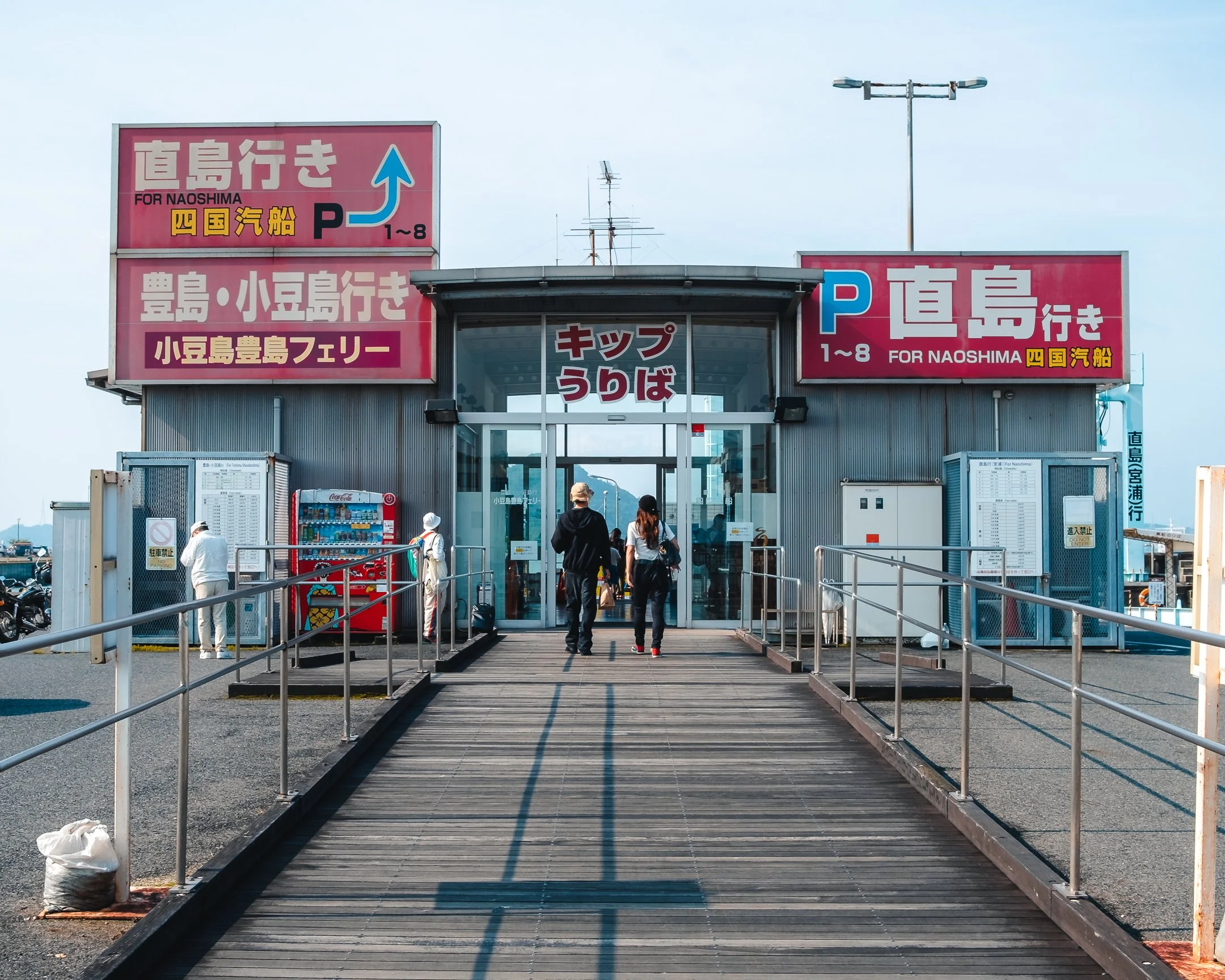
Head inside this building for the ticket counter. The English signage is limited, but you’ll know if you’re at the Naoshima ferry port!
There are two ports on Naoshima island: Miyanoura and Honmura. The western port of Miyanoura is going to be your best bet: Miyanoura Ferry Terminal is a larger hub than Honmura, with more frequent ferry service and more information for tourists. It is closer to most accommodations, and the bicycle rentals are around there. Pay for your ticket with cash, and then wait at at the specified location to board your ferry.
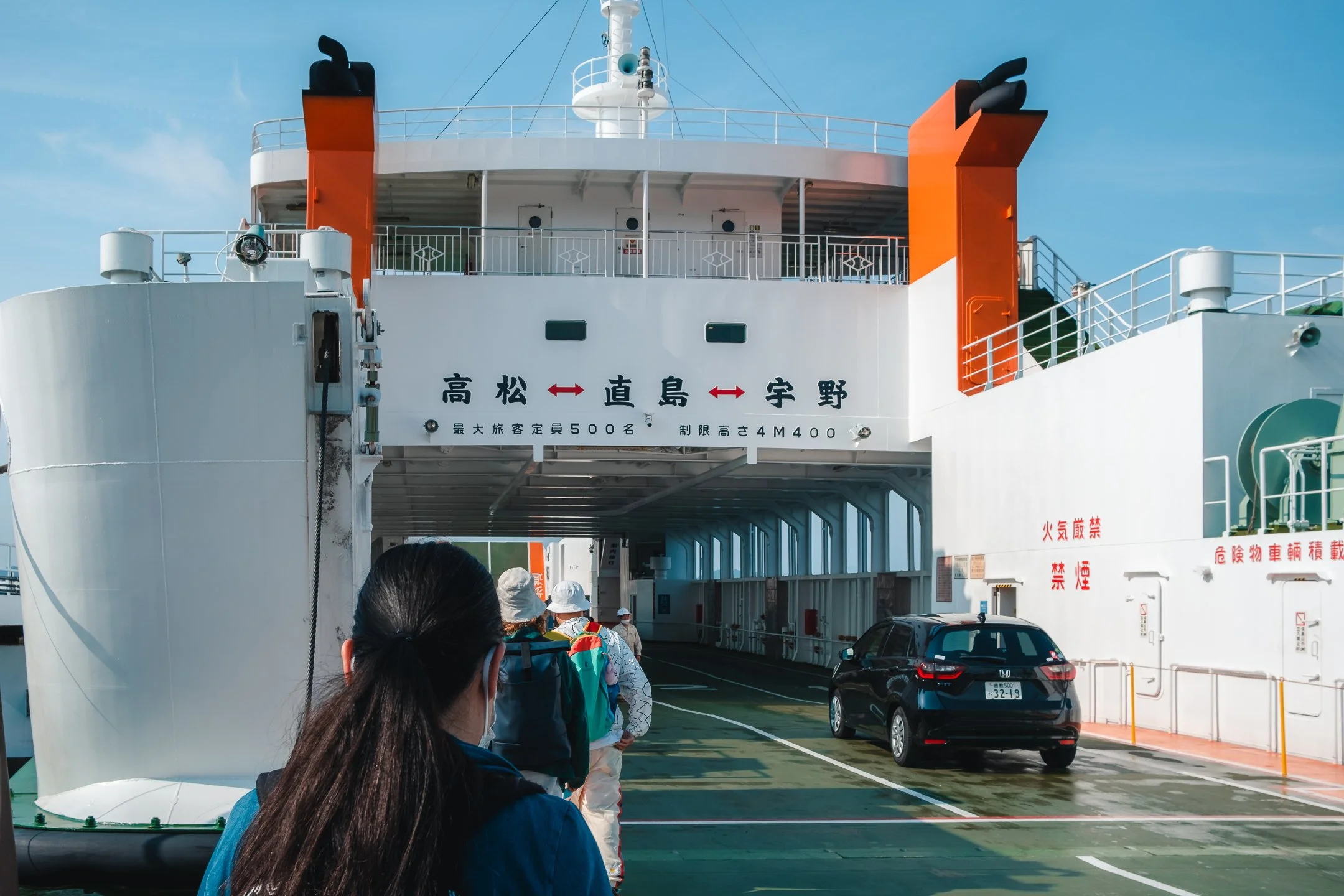
All aboard to Naoshima!
Relax and enjoy the views from the ferry during your 20-minute ride to Naoshima.
Naoshima
Once docked at Naoshima’s Miyanoura port, we secured our rental e-bikes. We used Ougiya Rent-a-Cycle, which offers electric bikes for ¥1,200 a day. They also have an online reservation system so that you can guarantee your e-bike. Our luggage was just our backpacks, so we didn’t have any issue cycling with them to drop them off at our accommodations, but if you are carrying larger luggage, you have a few options:
Store your items in the coin lockers at Miyanoura port upon exiting the ferry
Head to your accommodations first if nearby, and drop them off there before renting your bike
Leave them at the bike rental shop: Ougiya Rent-a-Cycle offers a luggage storage service for ¥500 per bag per day (until 6pm)
If you’re staying at Guest house Ougiya, Inn Hoshikuzu, or Hotel Wright Style, Ougiya Rent-a-Cycle can deliver your luggage to your hotel
Once we had picked up our bikes and were free from our luggage, we could finally explore the island. Here are some of the things we did during our day on Naoshima.
Red Pumpkin
This is probably one of the first sculptures you’ll notice as your ferry arrives at Miyanoura port! Created by Yayoi Kusama, this isn’t the only polka-dotted pumpkin you’ll see during your time on the island.
Naoshima Pavillion
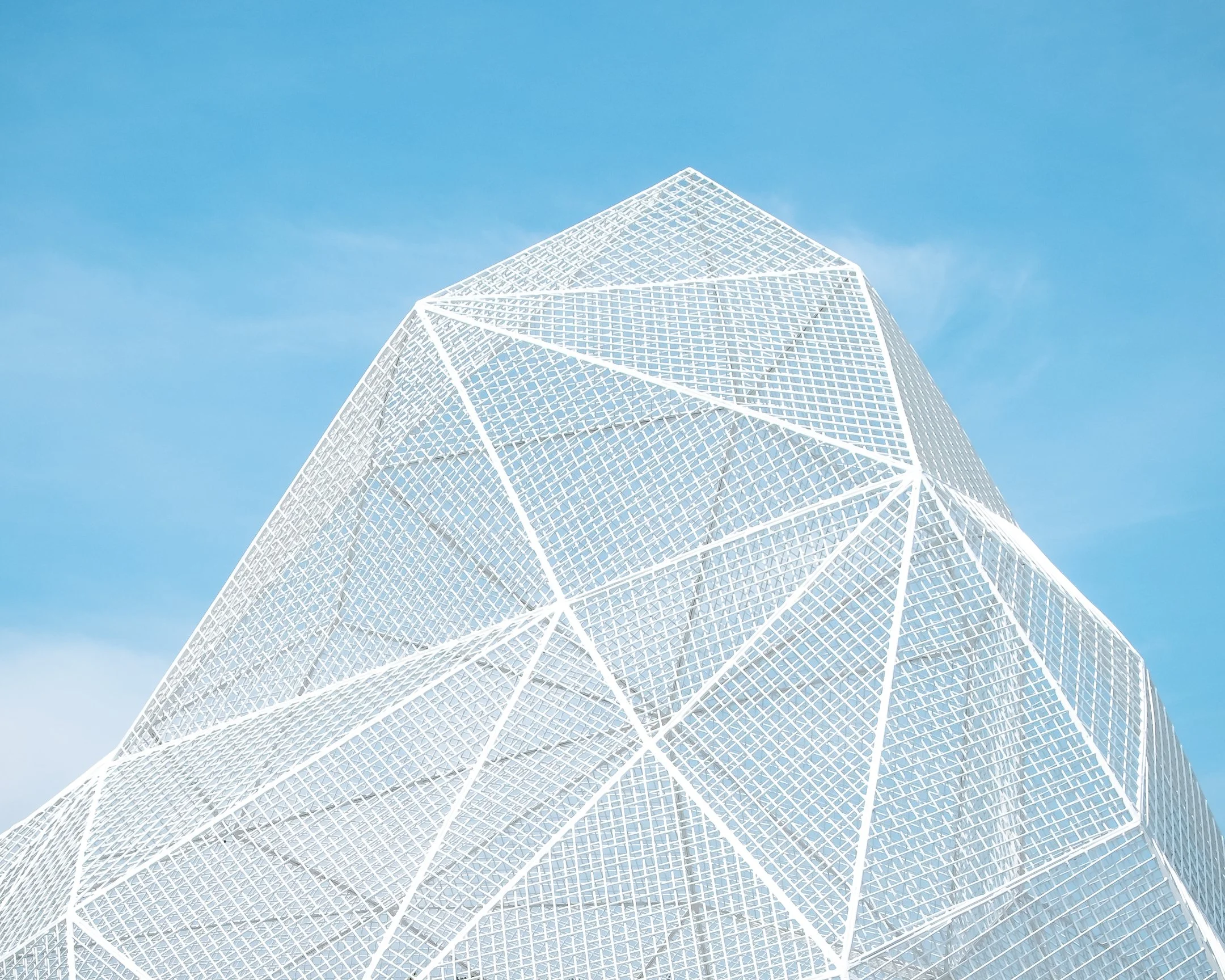
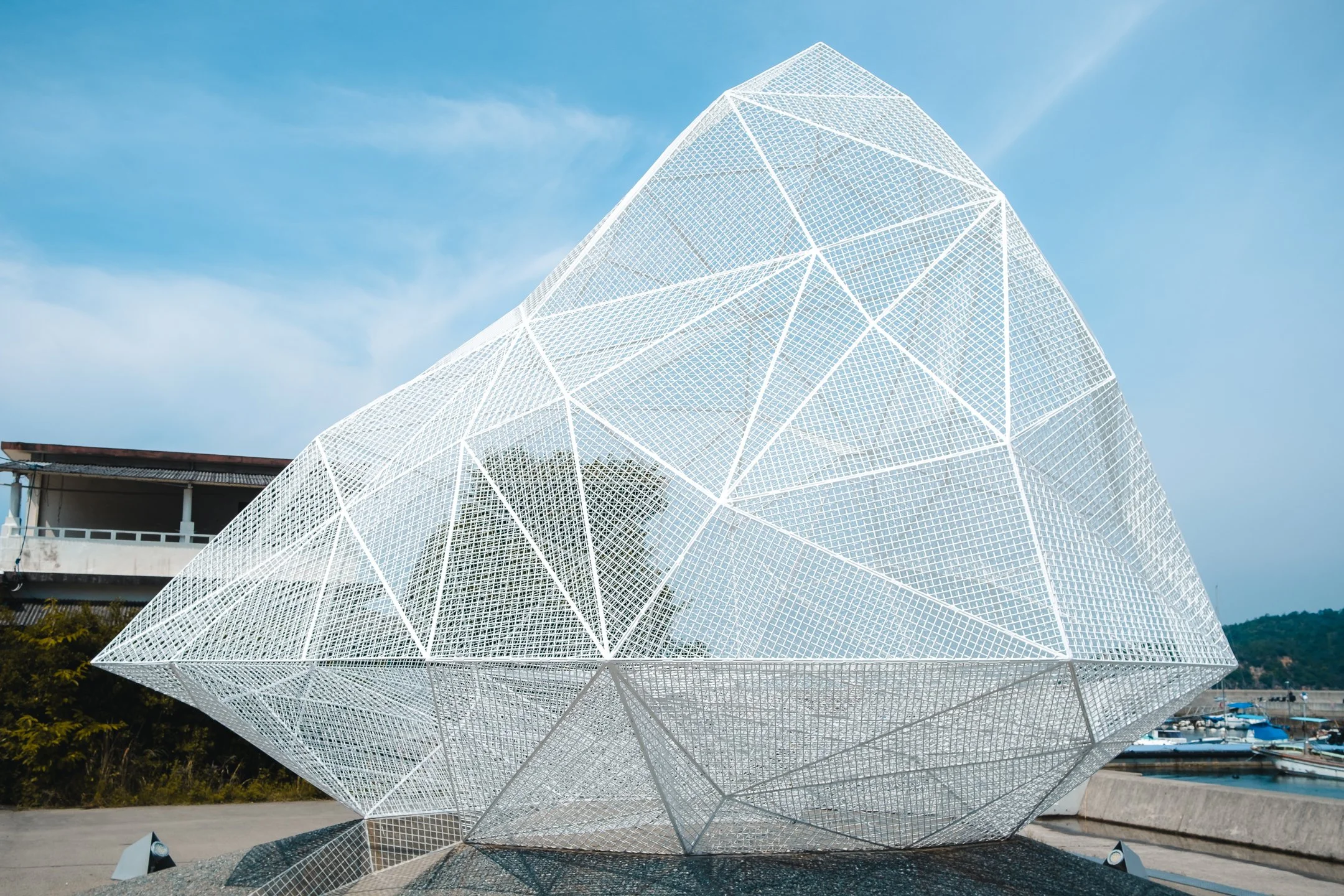
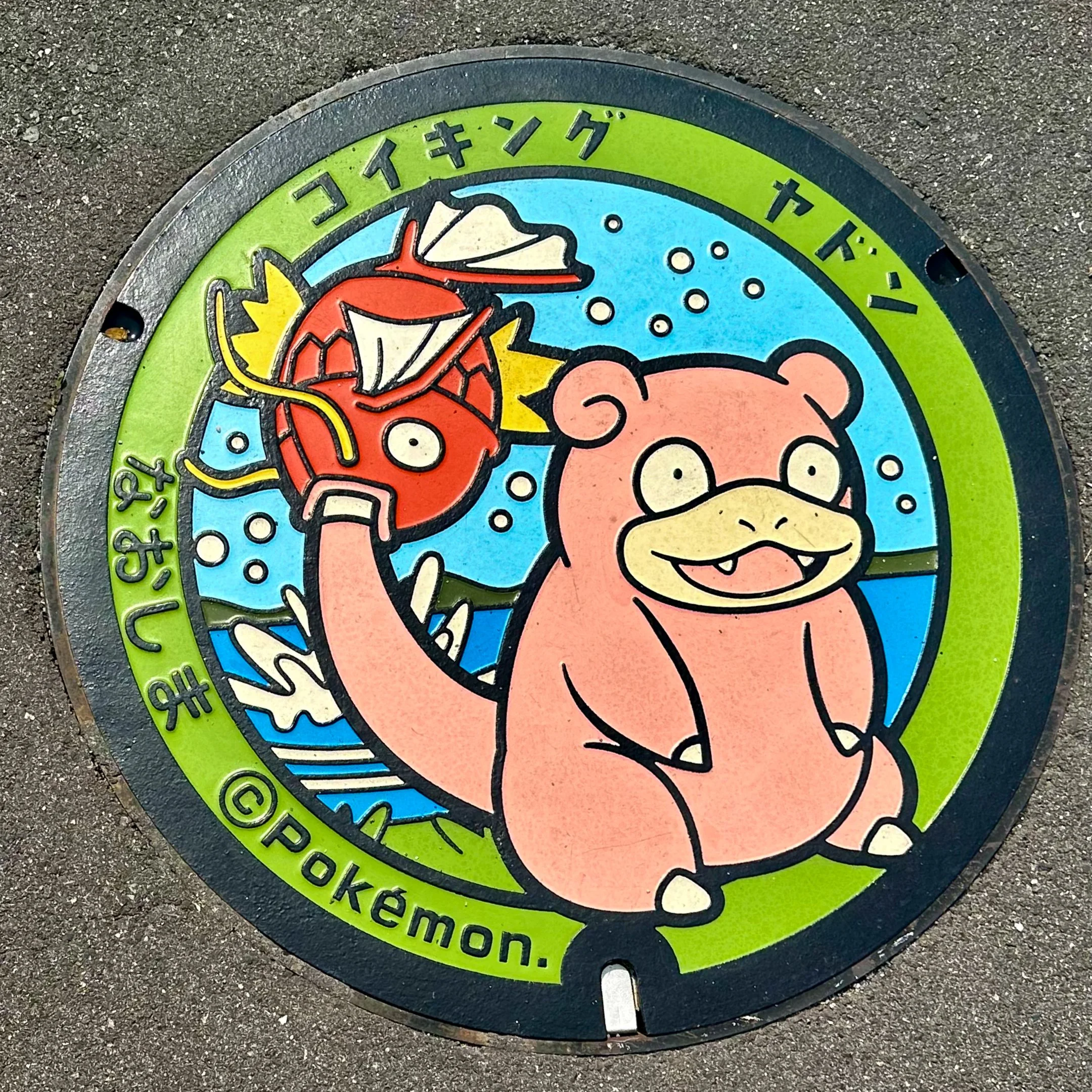
This structure is beautiful both during the day and at night, and makes for striking photos. Don’t forget to look for the Slowpoke Poké Lid nearby!
Chichu Art Museum
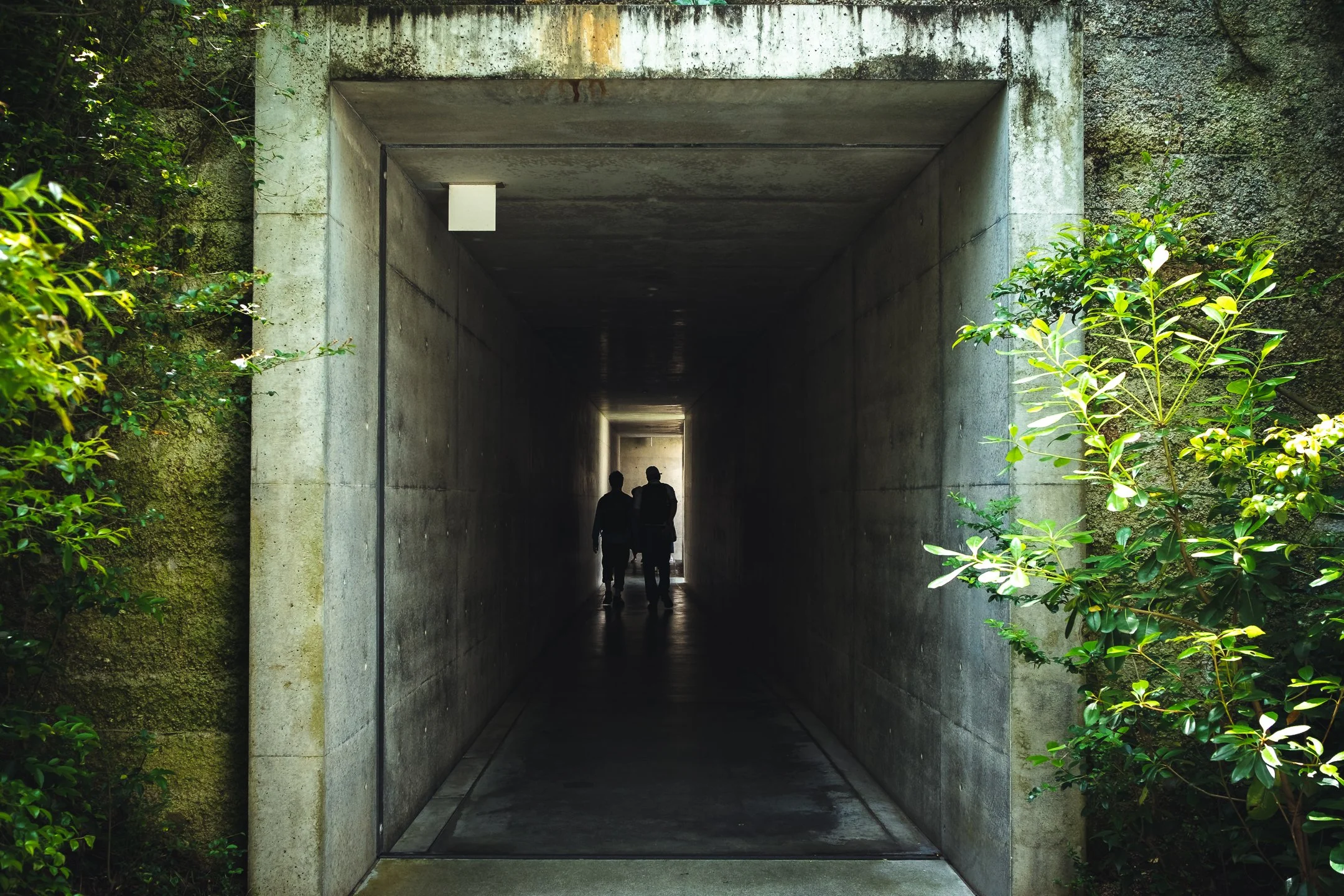
Chichū means underground, so as you might have guessed, this is an underground art museum. You will want to reserve your tickets in advance, as they can and do sell out. Head to the Chichu Art Museum Ticket Center and show the staff the QR code in your ticket confirmation email to pick up your admission ticket. Once it is your time slot’s turn to head to the museum, you’ll make the short walk to the entrance - enjoy the Chichu garden on the way.
Chichu Art Museum was architected by the renowned Tadao Ando, and photos are not allowed once you’re inside. The building in itself is a marvel, and inside you will be treated to exhibits by Claude Monet, Walter de Maria, and James Turell. My personal favourite was James Turell’s “Open Field”. This isn’t the last you’ll hear about this artist during this trip report, but I won’t spoil either experience: you will just have to go see them for yourself.
If you’re feeling hungry, end your visit to the museum at the relaxing Chichu Cafe, with stunning views of the Seto Inland Sea, and an open air patio and garden available for your enjoyment.
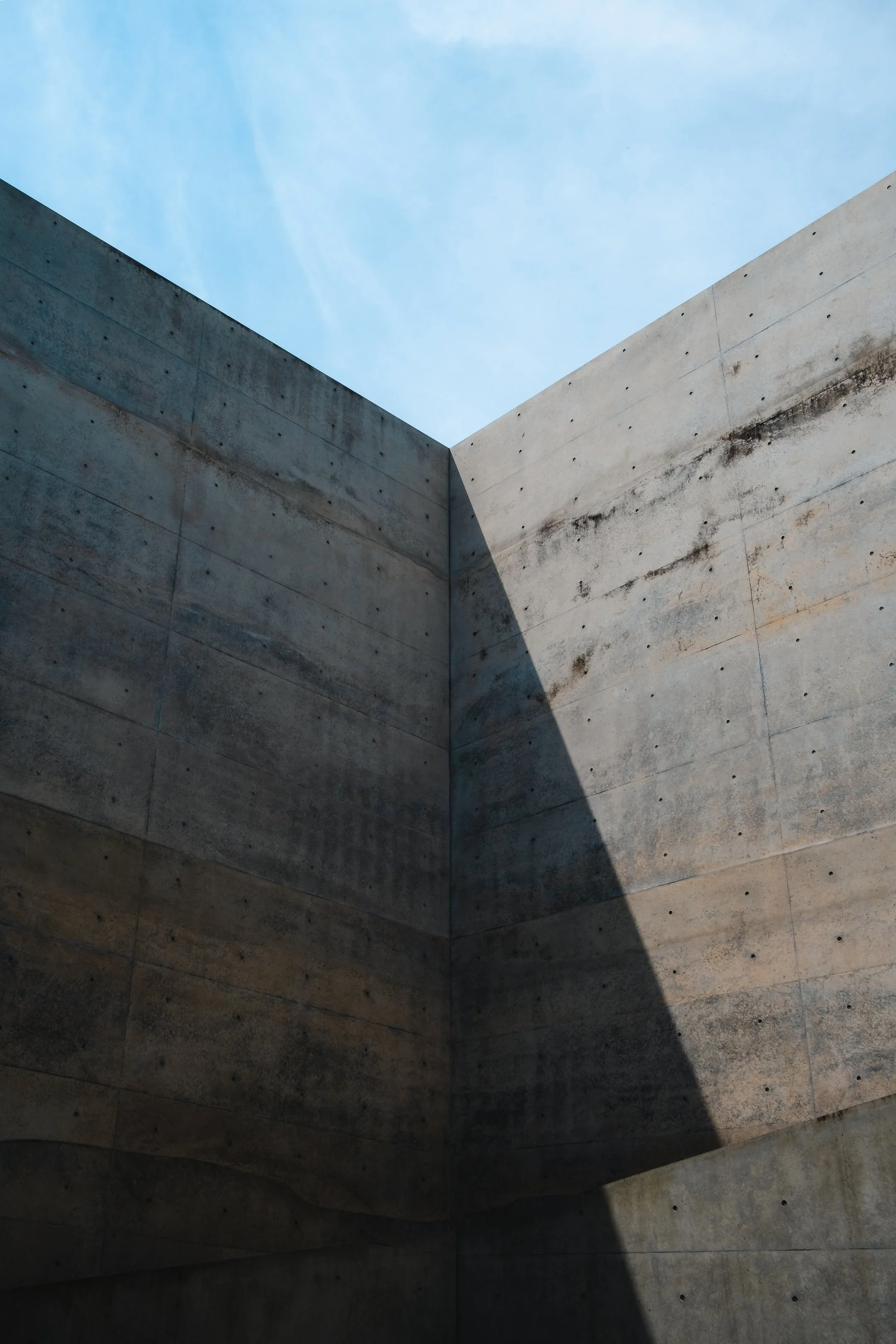
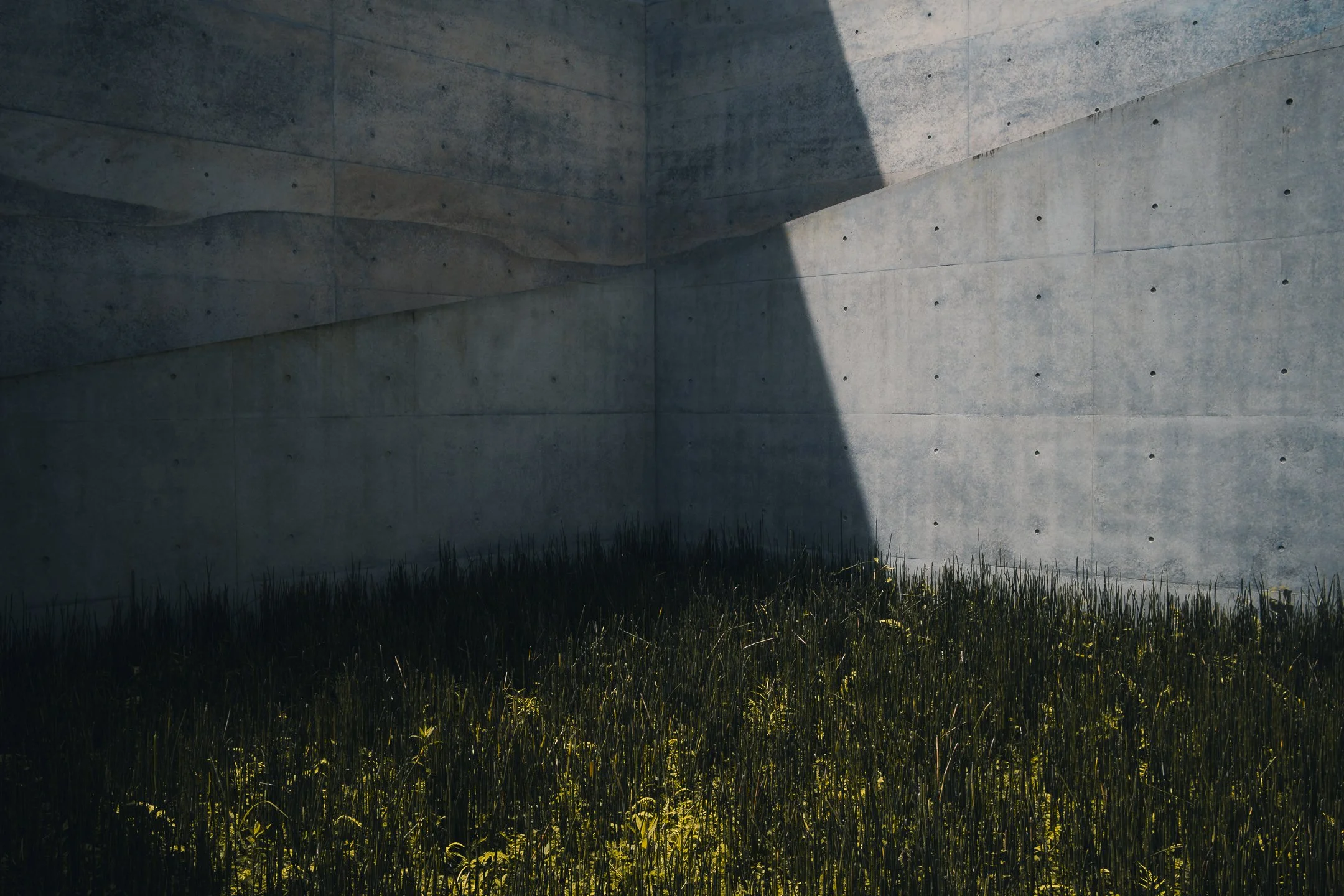
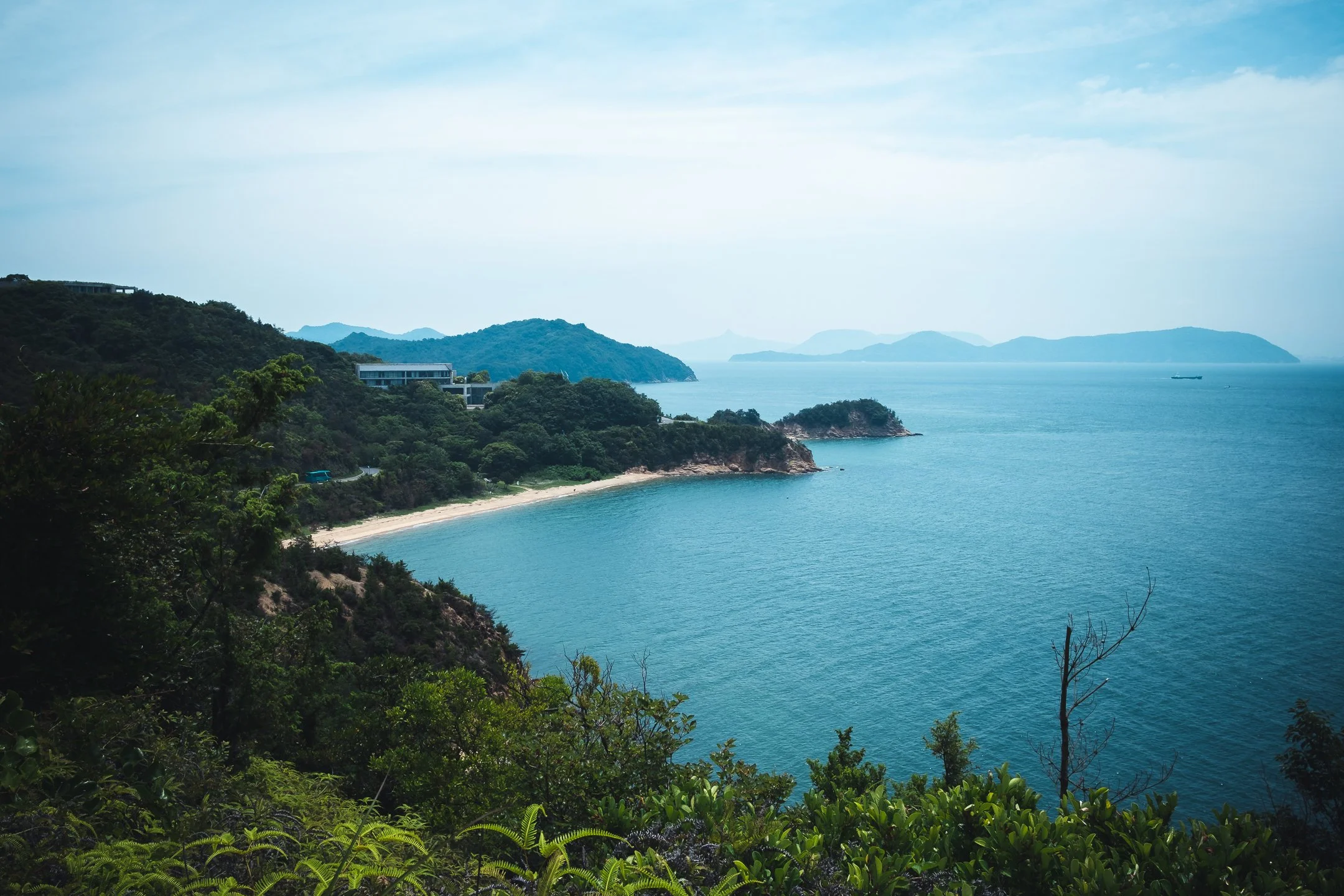
Once we were done our visit to Chichu Art Museum, we hopped back on our e-bikes and made our way over to our next destination. This is where I must warn you about the Benesse House Hotel & Museum area. The Benesse House is both a hotel and art museum designed by Tadao Ando, and guests who stay at the hotel have exclusive access to some art exhibits. The rooms are extremely expensive and very limited, with reservations opening up 6 months in advance. We did not stay here, but the reason I bring this up is because the entire hotel grounds, which include many art exhibits, are off-limits to any outside vehicles, including bicycles. The hotel provides their own bicycles to their guests. So, we reluctantly parked our bikes at the Naoshima North Gate Bicycle Parking Lot, said hi to a few resident cats, and began our trek down to the museums and galleries on the hotel grounds.
Lee Ufan Museum
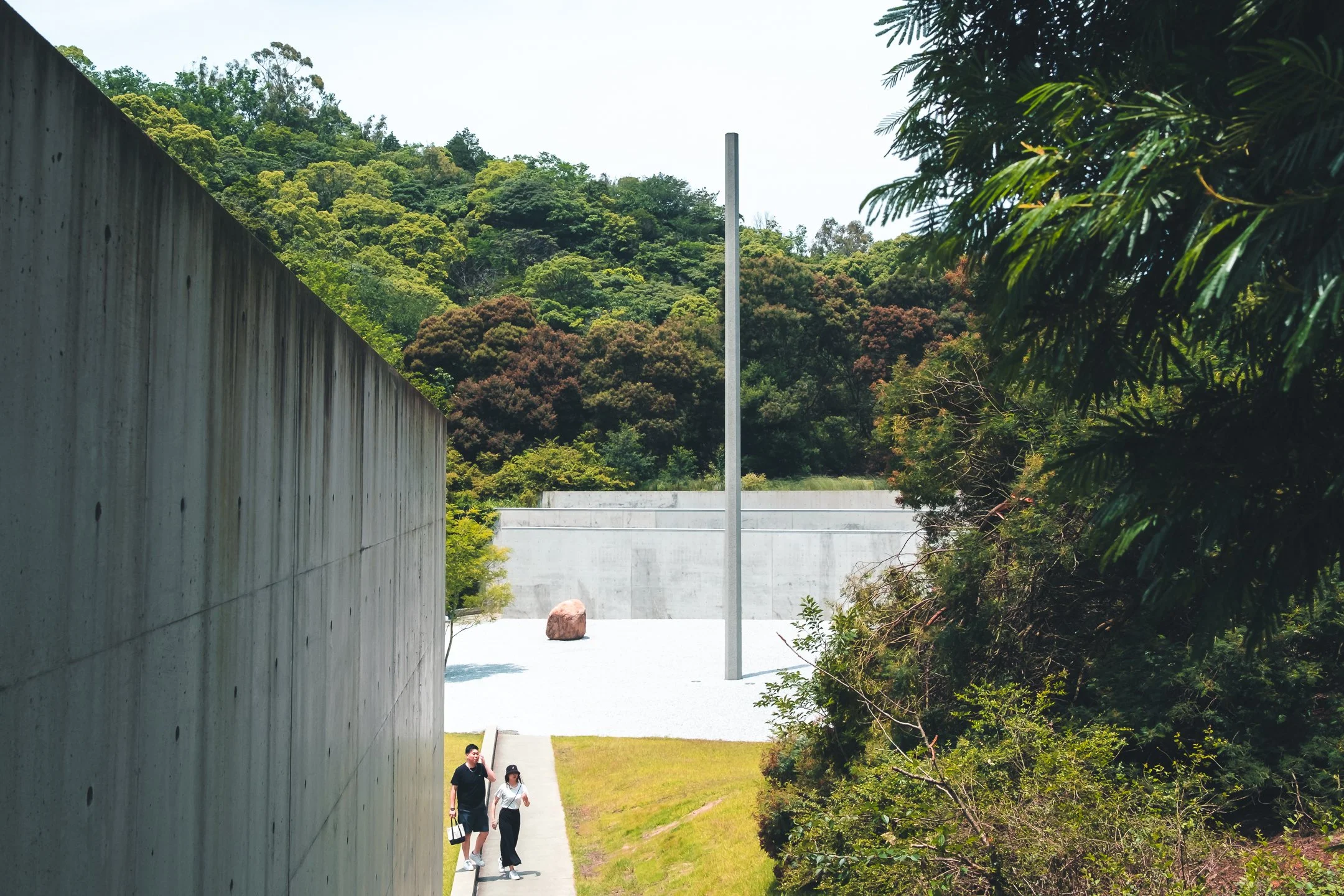
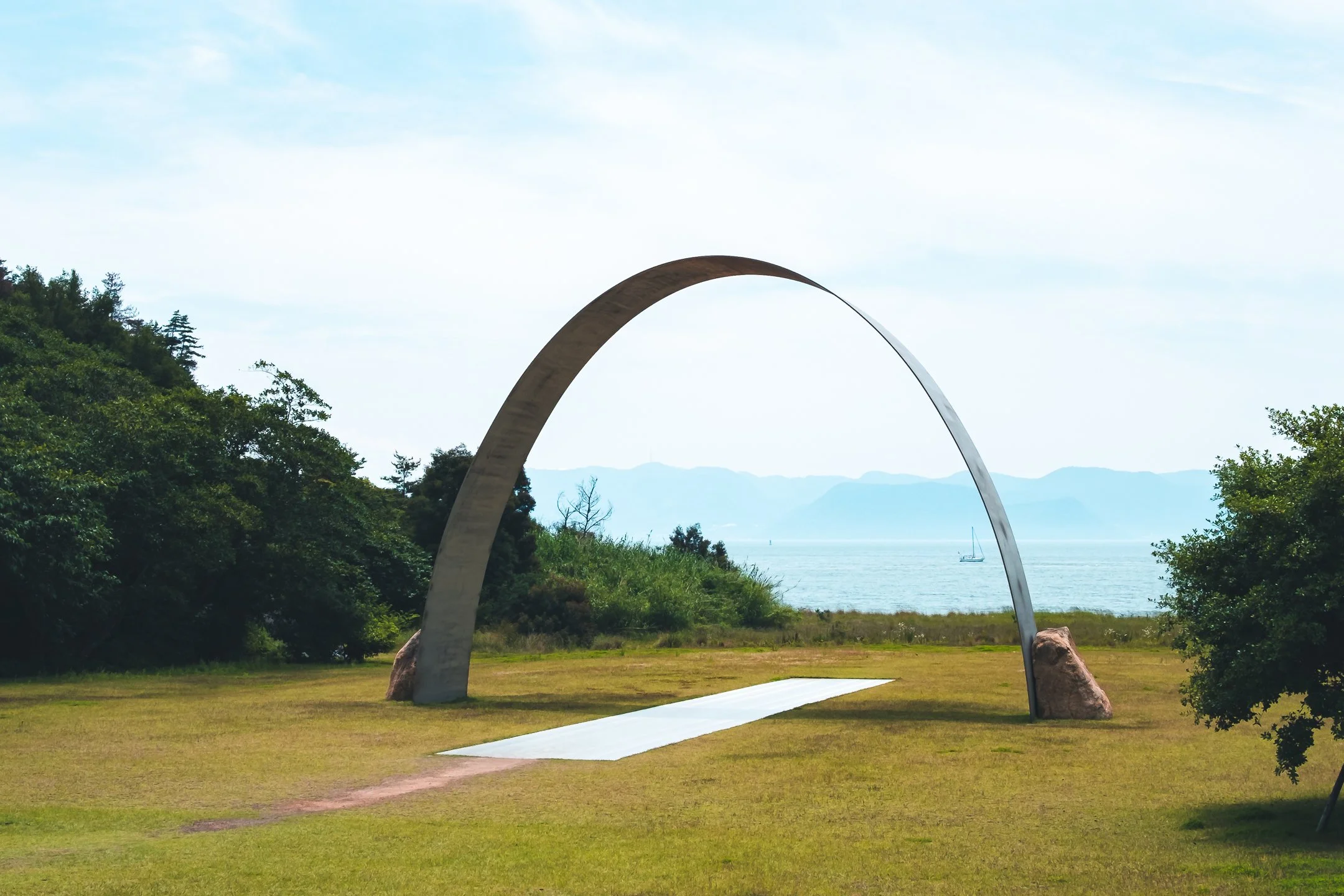
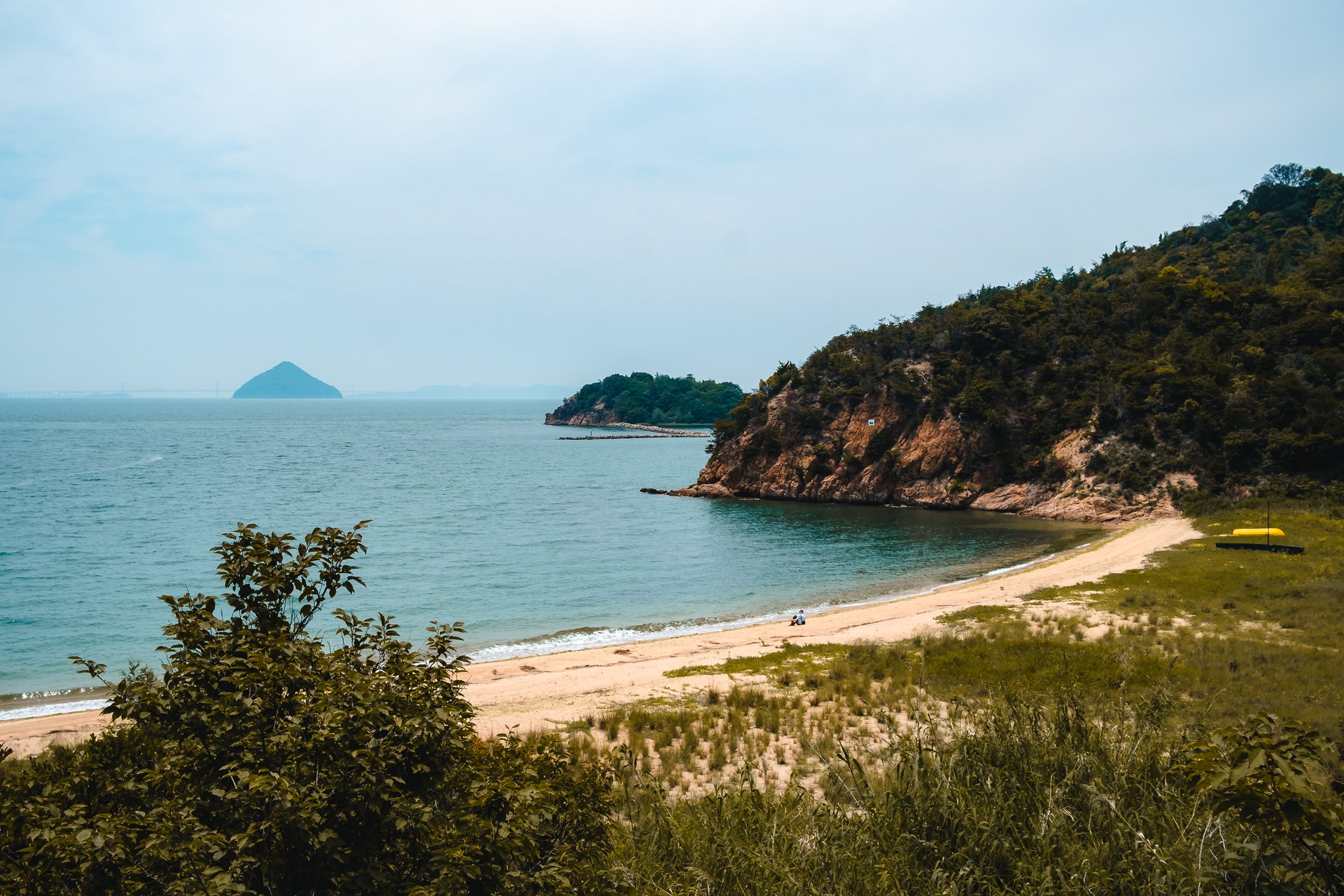
Like Chichu Art Museum, the Lee Ufan Museum was architected by Tadao Ando and is partially underground. This museum features paintings and sculptures by the Korean artist, and no prior reservations are necessary in order to enter. Outside of the museum are several other of Lee’s works.
Benesse House Museum
The Benesse House Museum artworks are held not only in the Hotel/Museum building itself, but also the surrounding area. The following sites are all part of the Benesse House Museum.
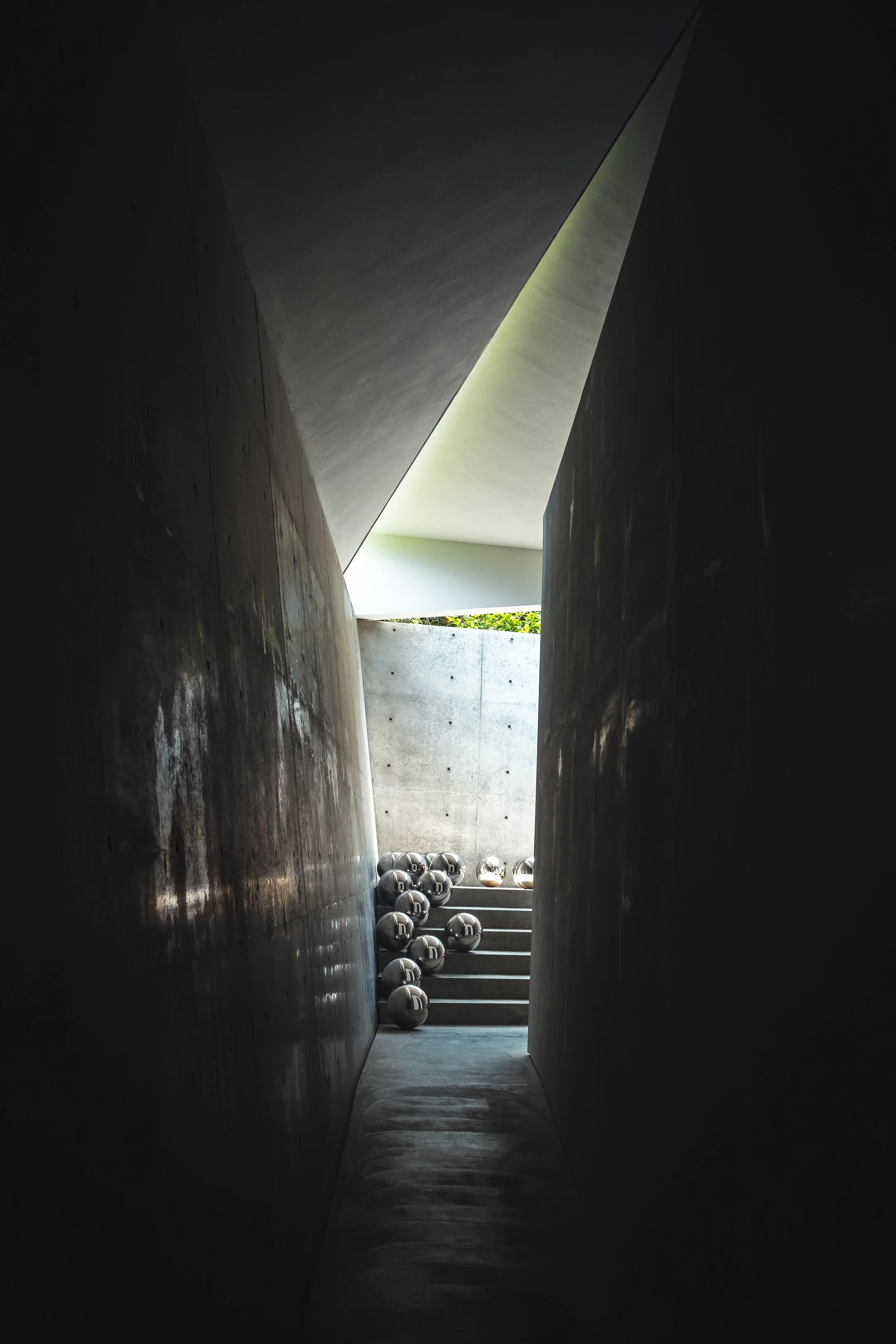
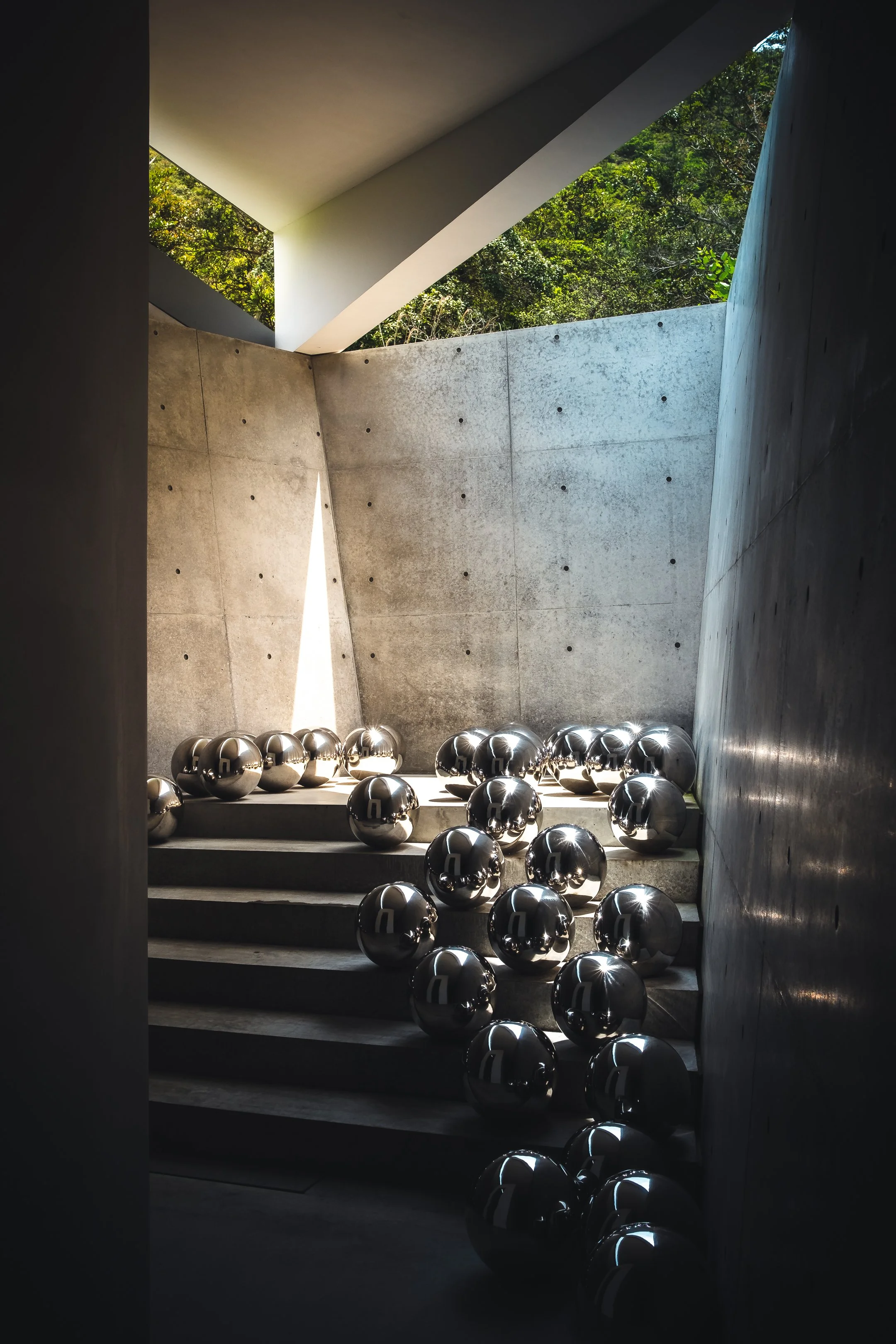
The entrance to the Valley Gallery is near the Lee Ufan Museum, across the street. Admission to this area is included in the Benesse House Museum entrance fee, which can be purchased on the spot with no prior reservation necessary. There are two works here to enjoy.
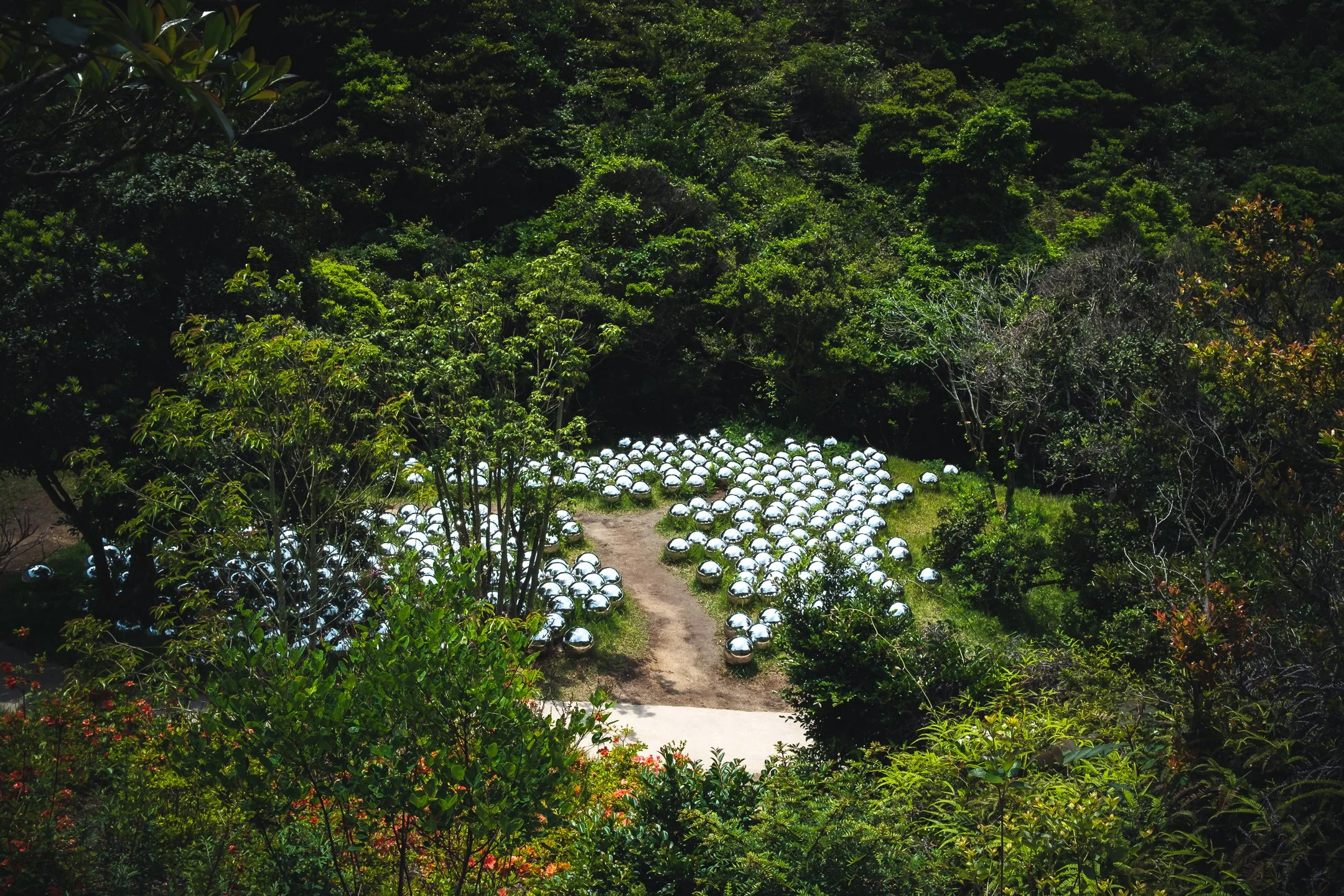
Inside the Benesse House Museum building itself, as a non-hotel guest visitor, you have access to certain floors and areas on the property. There are works on BF, 1F, and 2F that you can explore at your leisure, using the ticket you purchased to access the Valley Gallery.
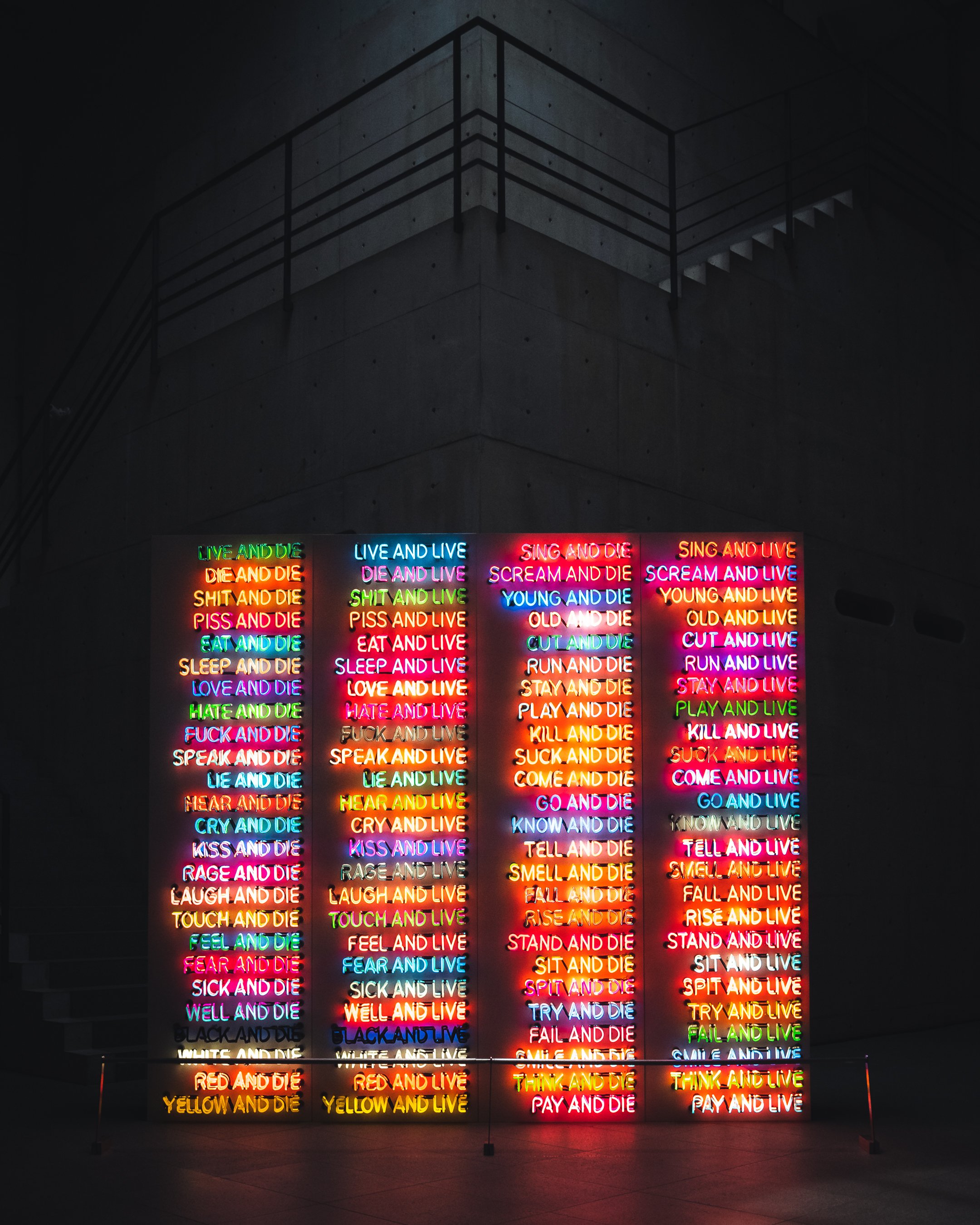
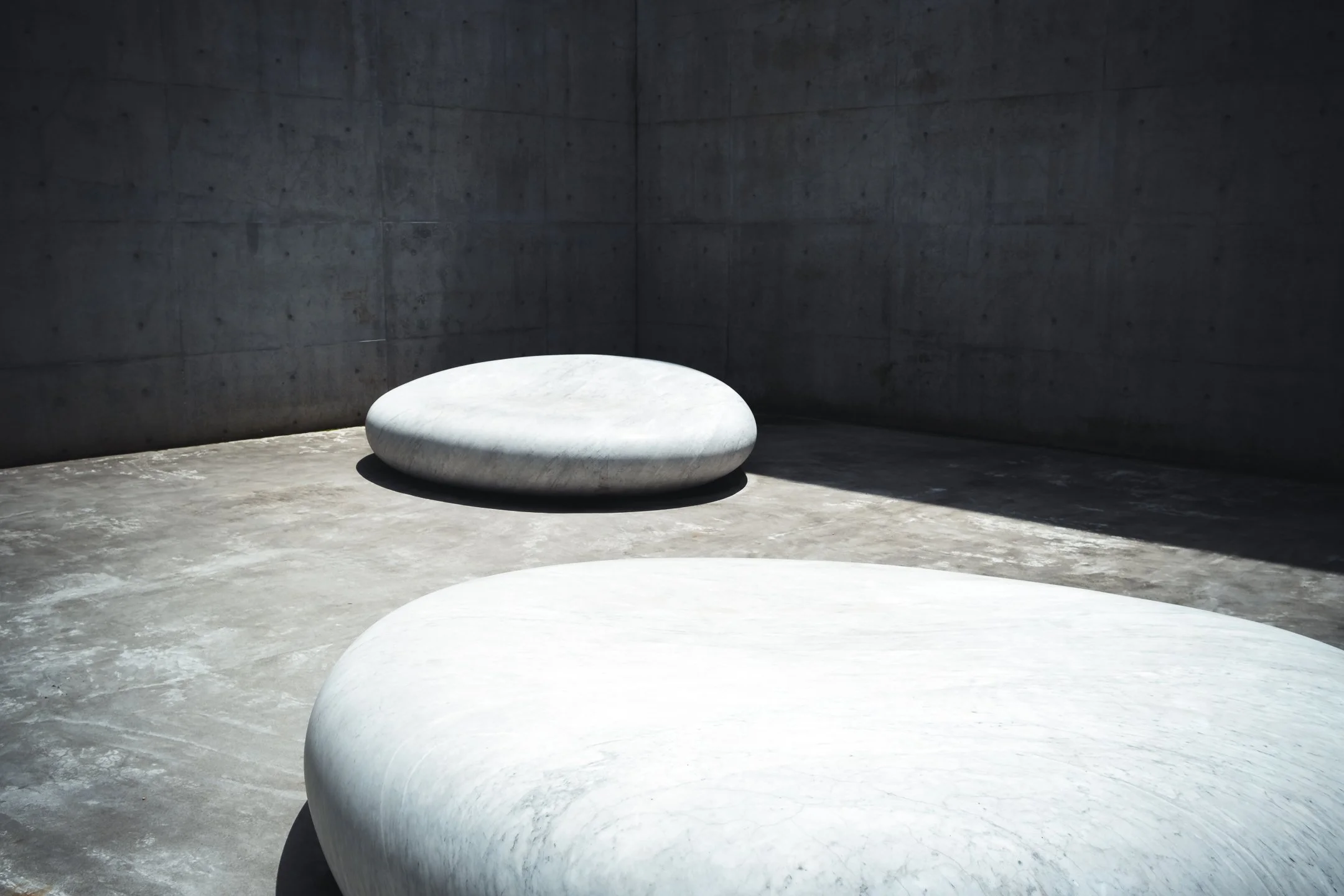
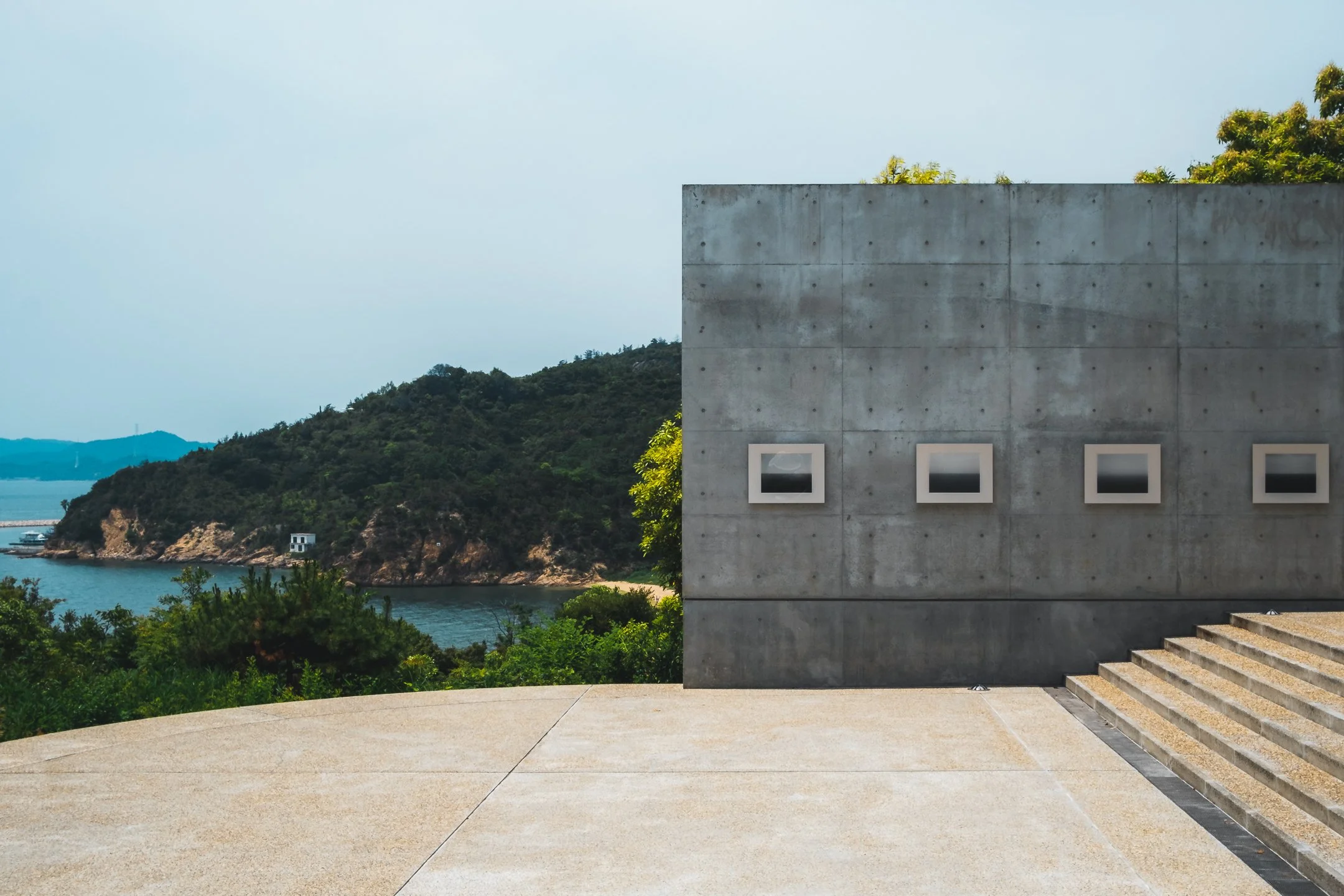
Outside the hotel, the Seaside Gallery is another Ando-designed structure that houses another exhibit by Walter de Maria. Also nearby is the Cultural Melting Bath: Project for Naoshima, a Feng-Shui based artwork that surrounds a large Jacuzzi-style bath.
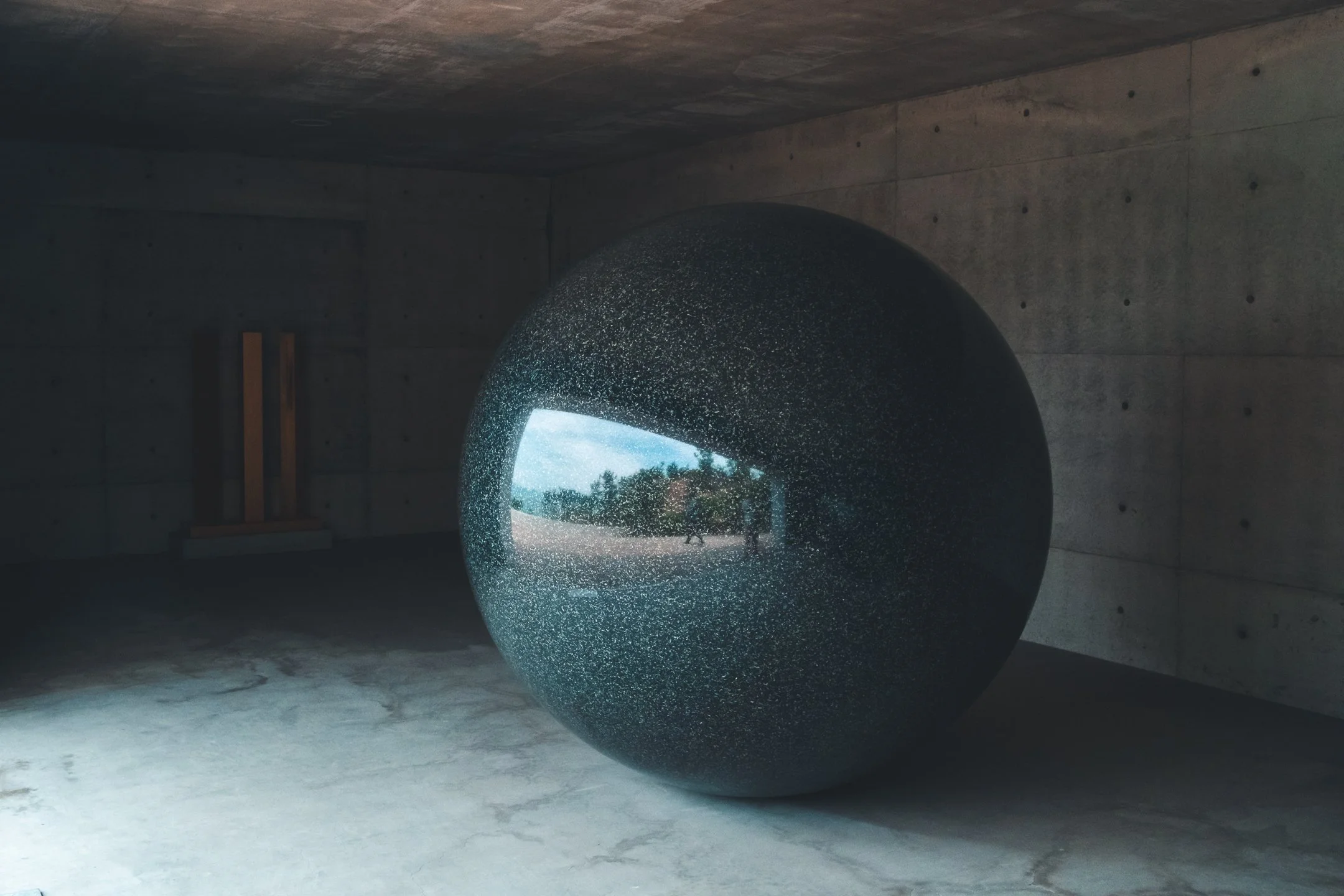
Seen/Unseen Known/Unknown
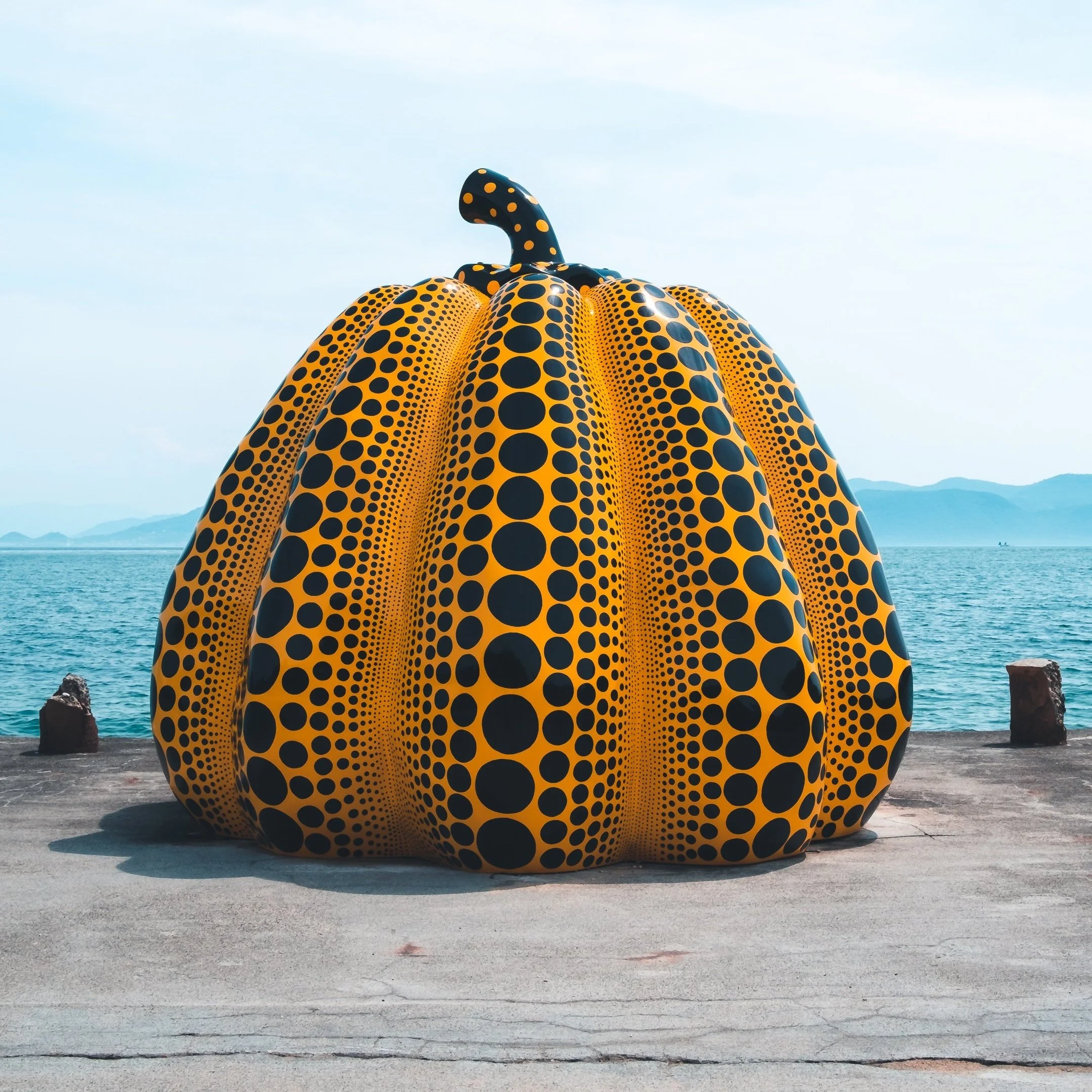
The remaining Outdoor Works are scattered in the surrounding Benesse House grounds, and includes the iconic Yellow Pumpkin by Yayoi Kusama. If it’s a busy day, prepare to line up to get a shot of Naoshima’s most recognizable gourd.
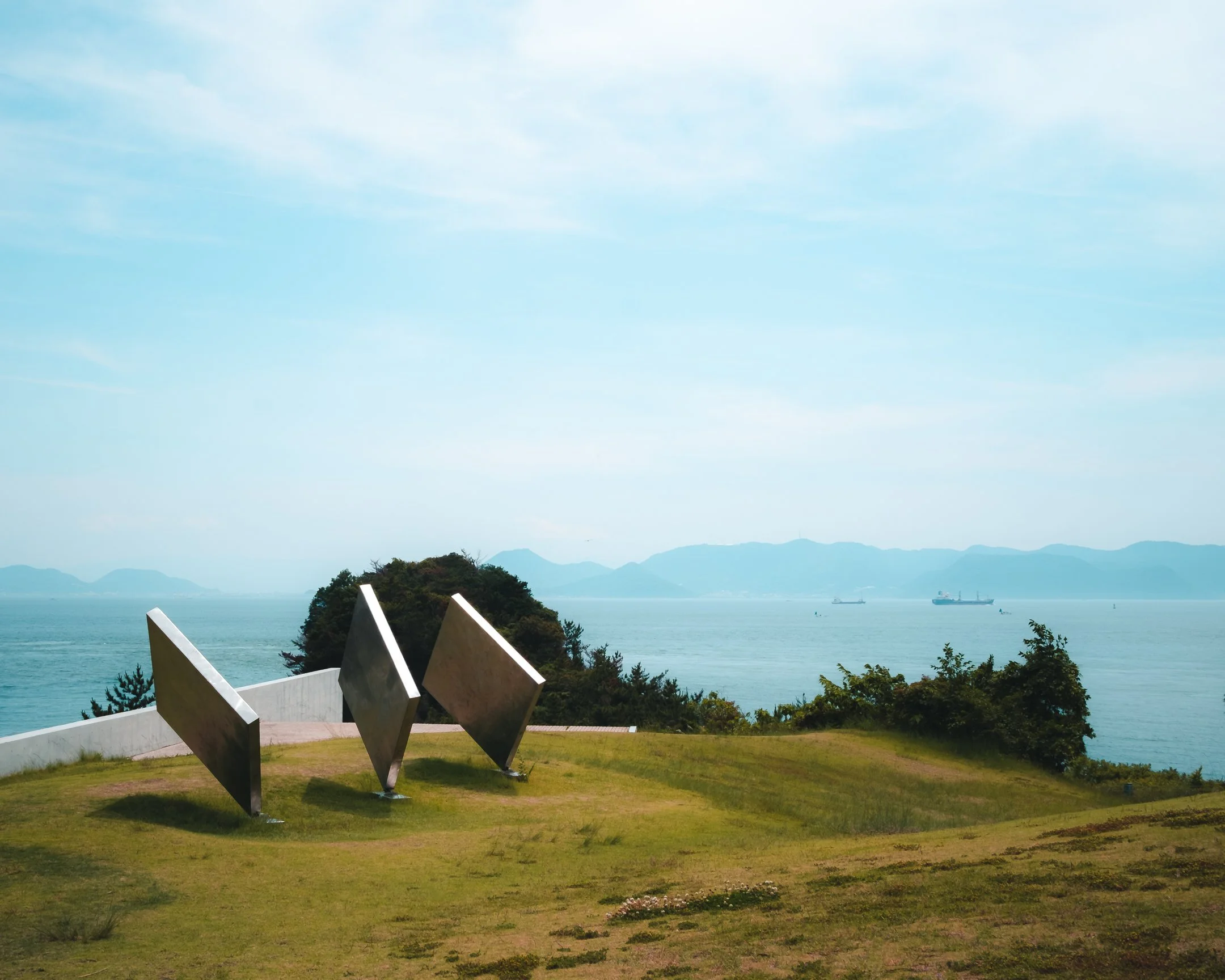
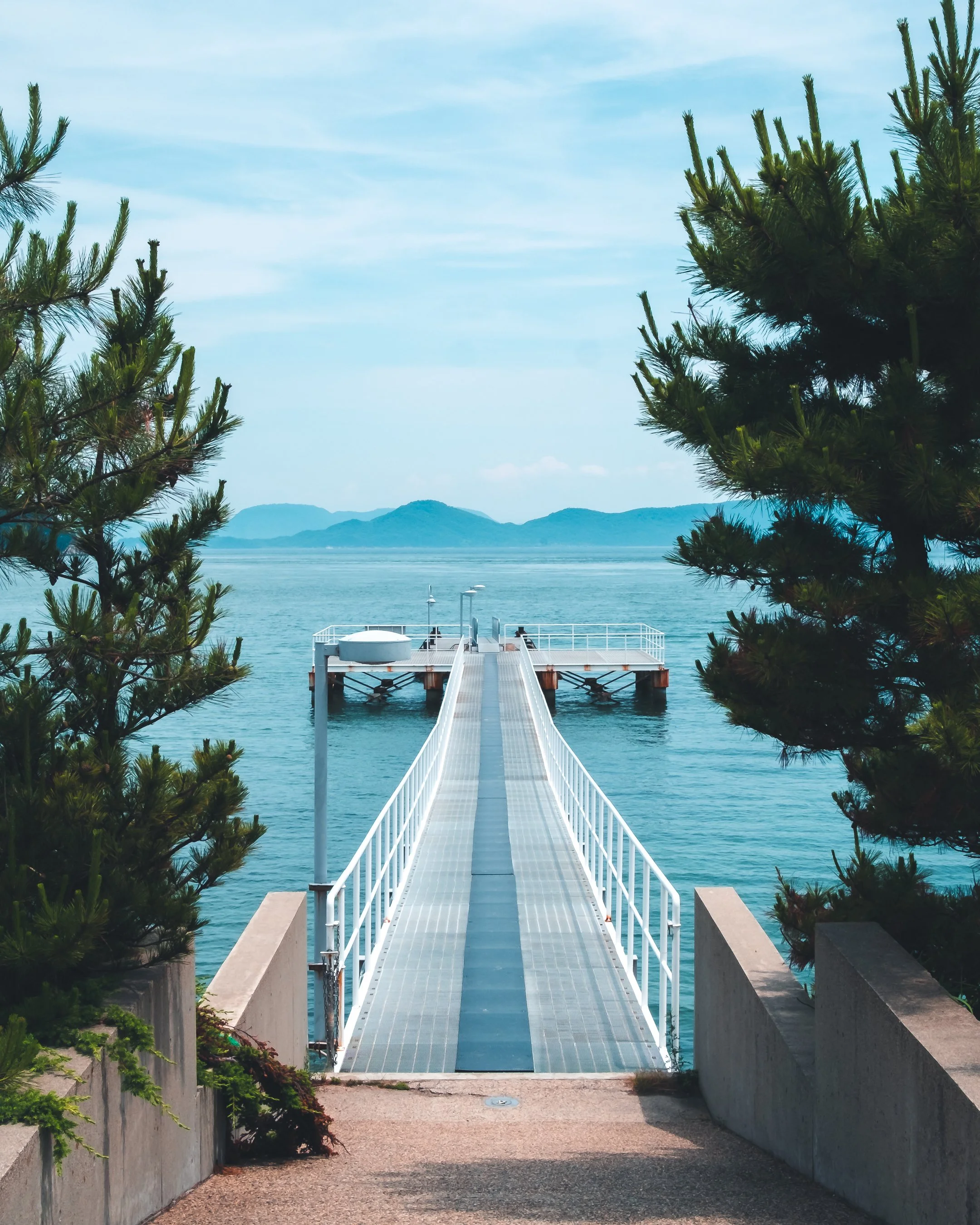
Hiroshi Sugimoto Gallery: Time Corridors
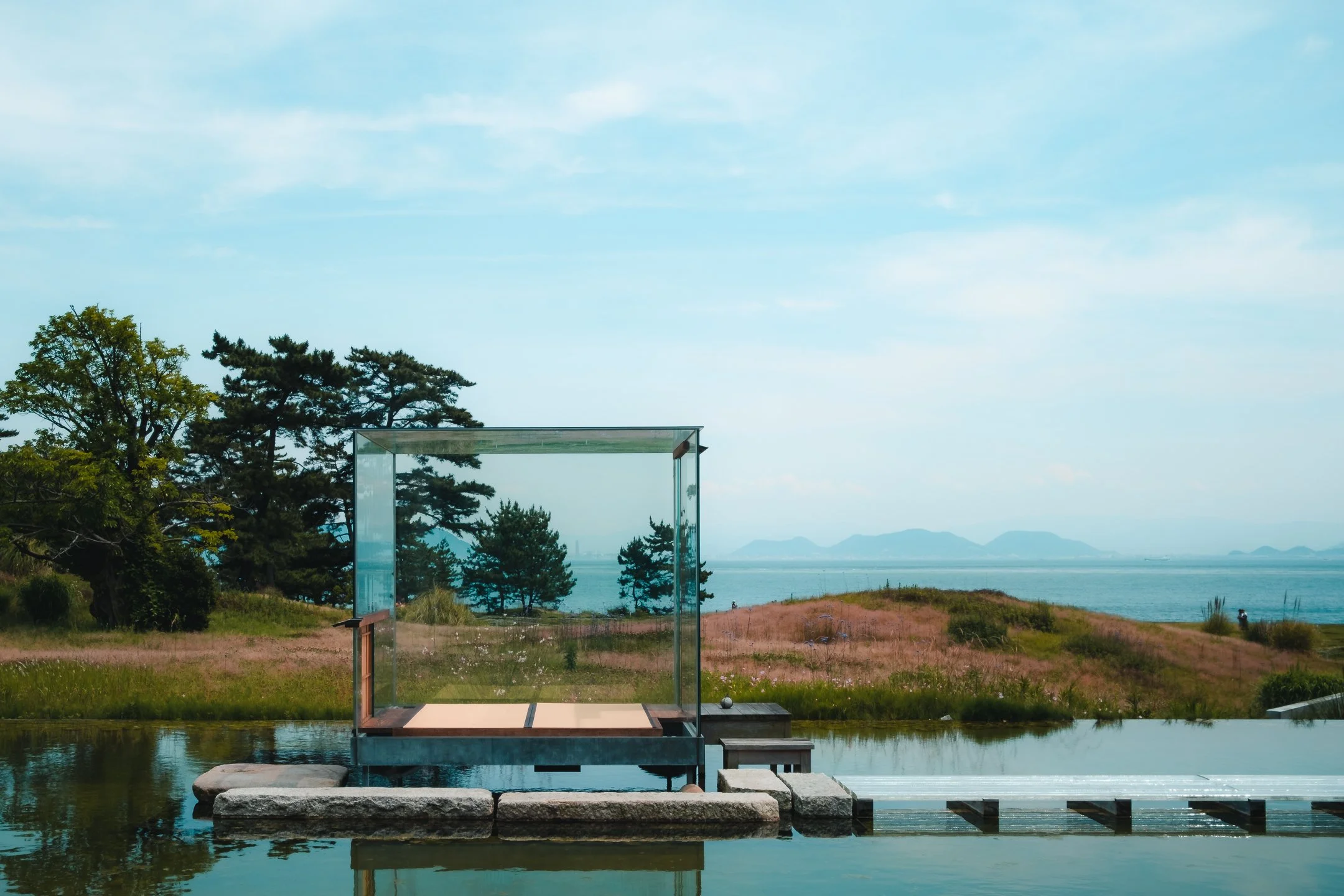
The admission fee for this gallery includes a cup of tea and a small snack. Advance reservations are recommended, as spaces are limited and in 30-minute increments, but if there are any slots remaining, tickets can be purchased on the spot as well. Enjoy Hiroshi Sugimoto’s photographs and sculptures, and then sip some tea while you admire “Glass Tea House Mondrian”.
After wrapping up at the Benesse House Museum area, we could finally walk back to our waiting e-bikes and continue on our way. Next up is the eastern Honmura area of Naoshima island, which features many more exhibits.
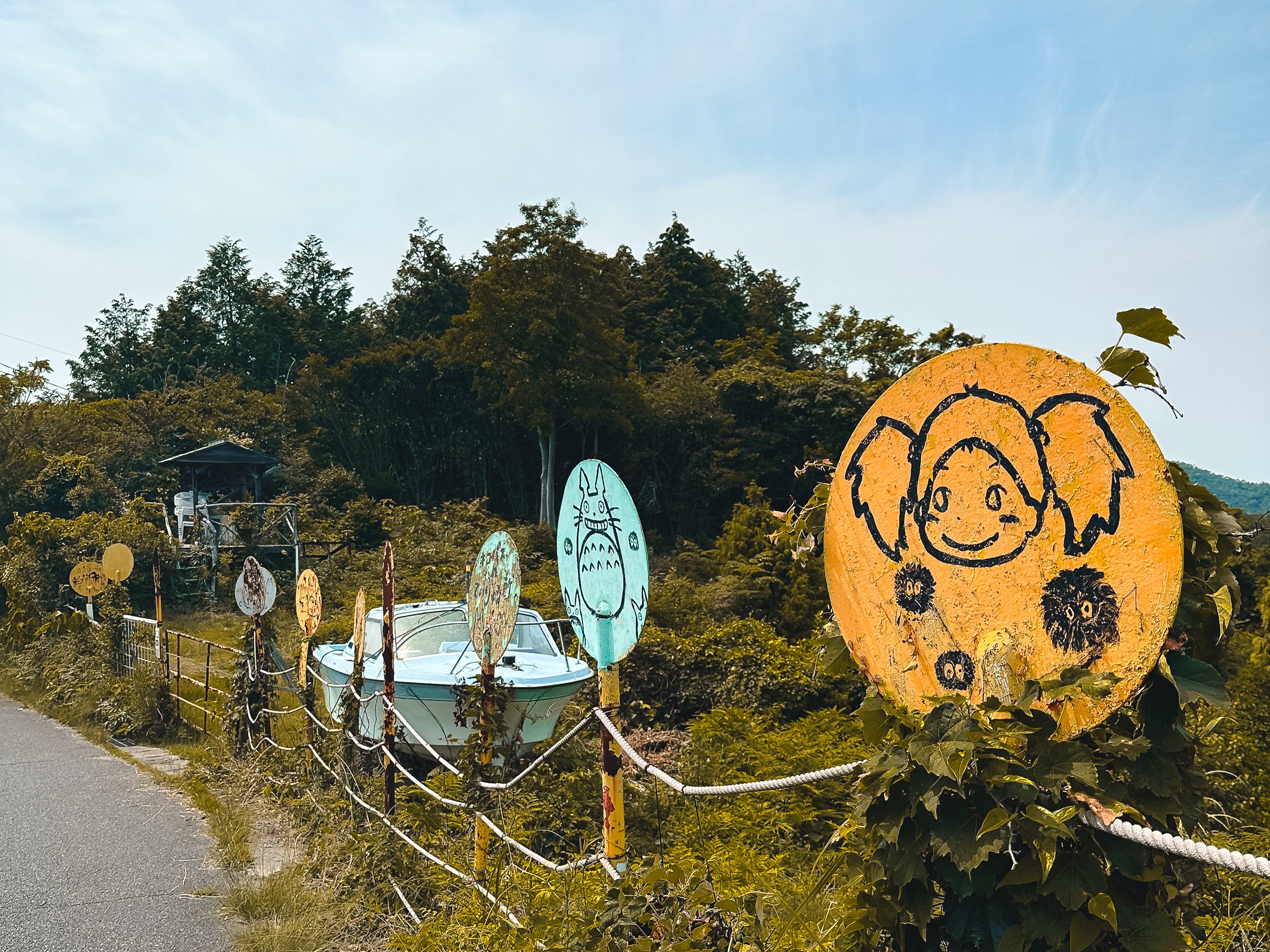
But first, we noticed a cute Ghibli-themed bus stop. The Catbus stop, perhaps?
Ando Museum
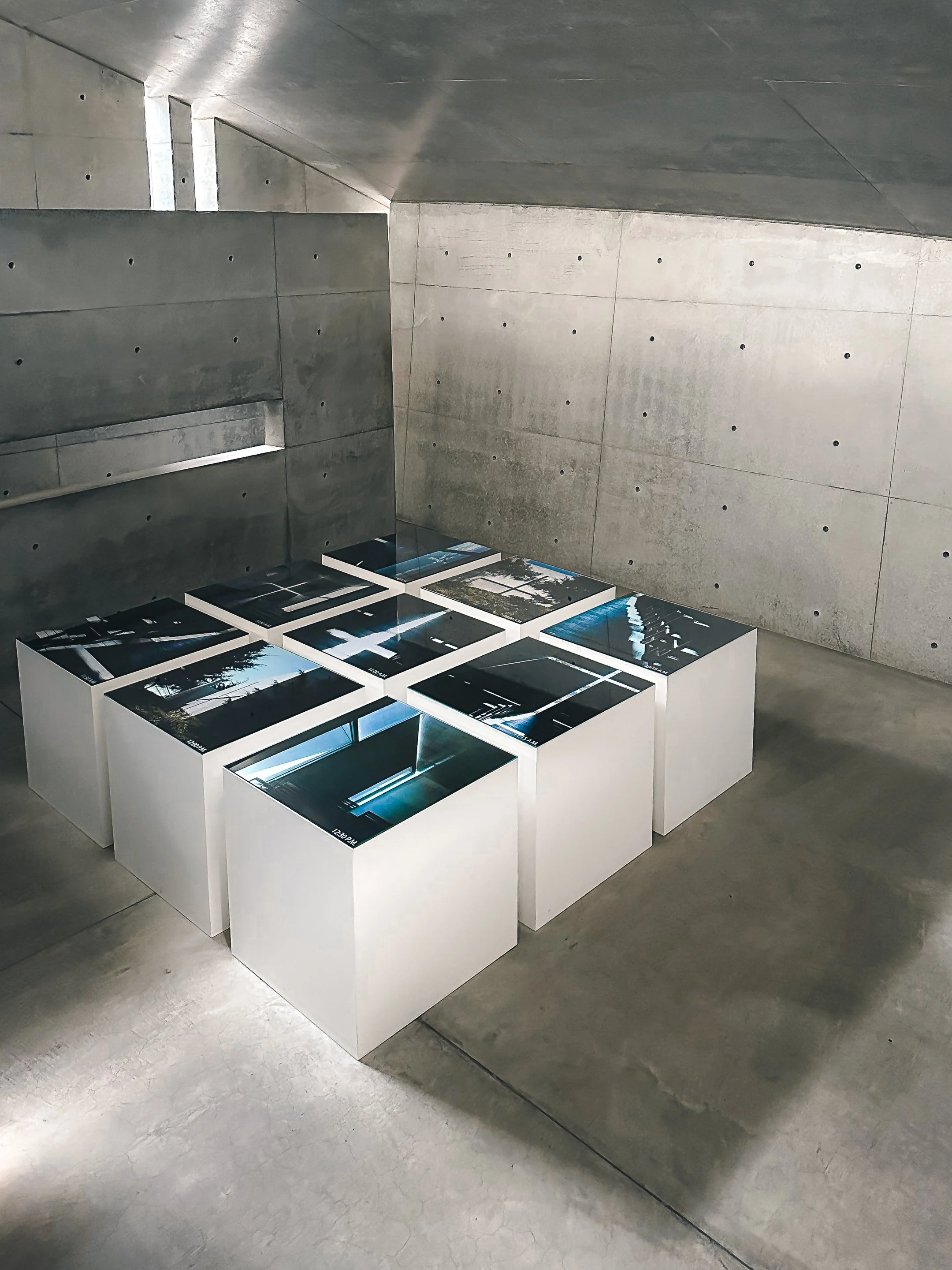
At this point you’ve probably noticed that Takao Ando is a pretty prominent figure on Naoshima! The interior of this museum was of course designed by Takao Ando, but the exterior remains a century-old traditional wooden house. Learn more about the celebrated architect and enjoy the design of the space.
Art House Project
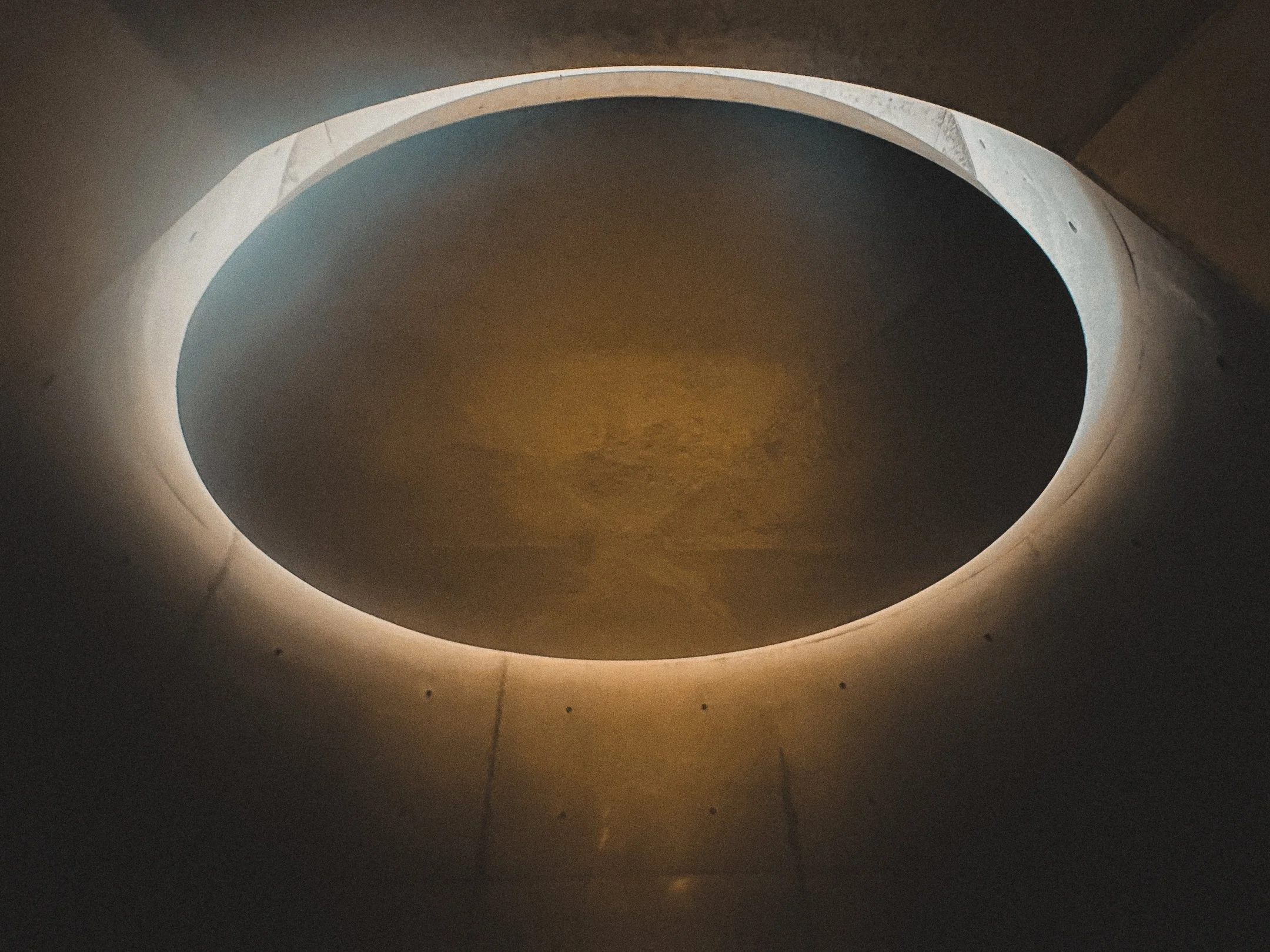
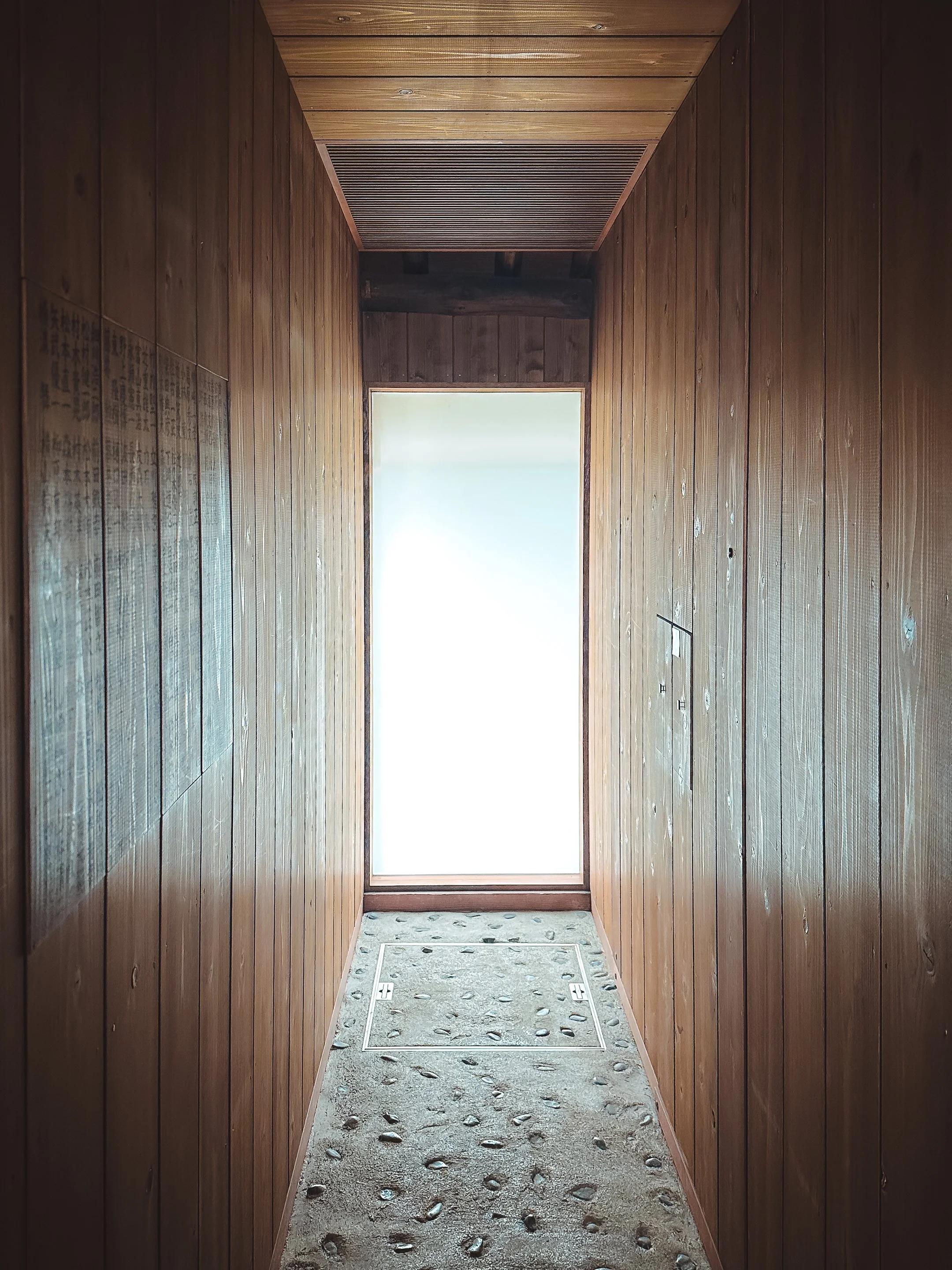
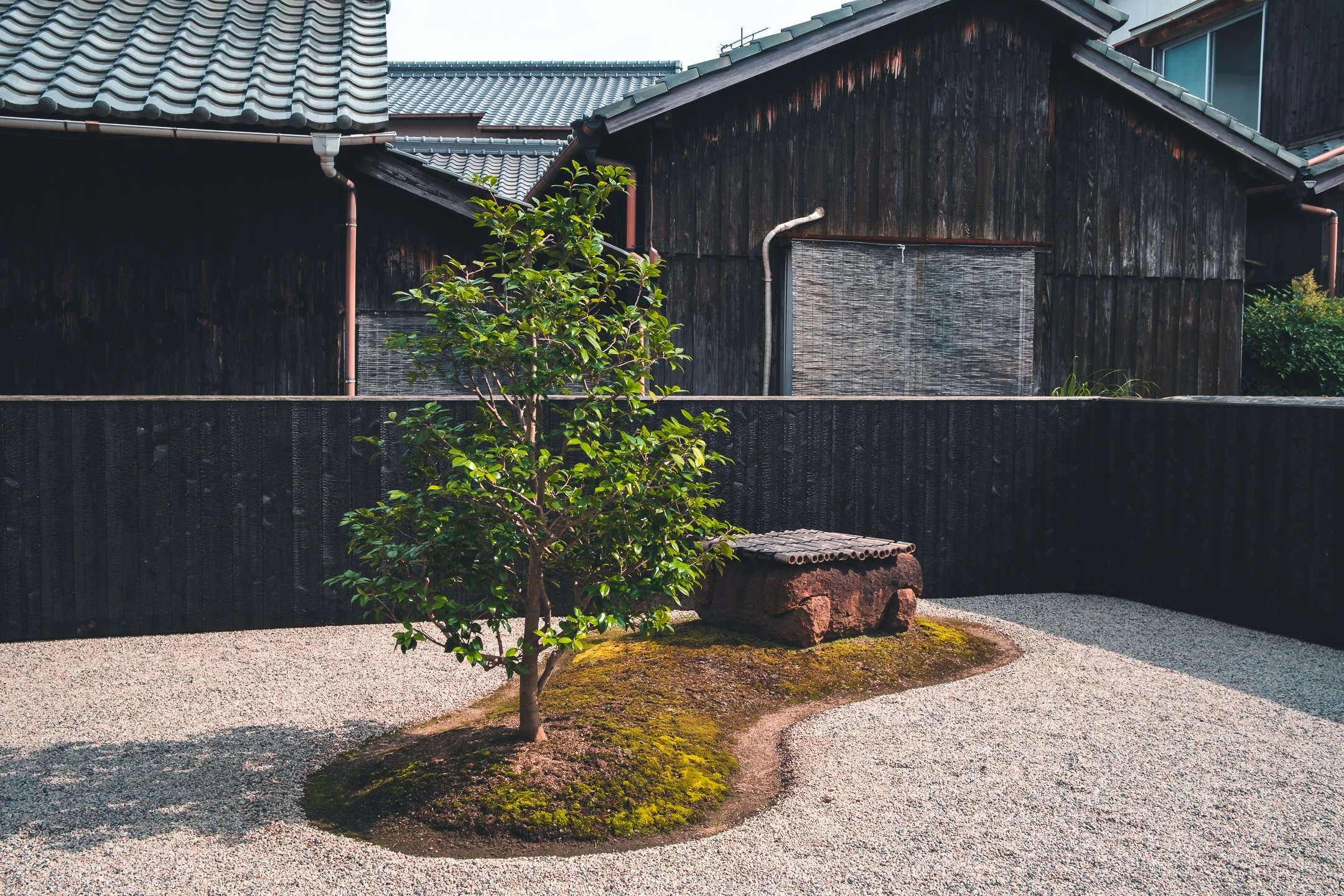
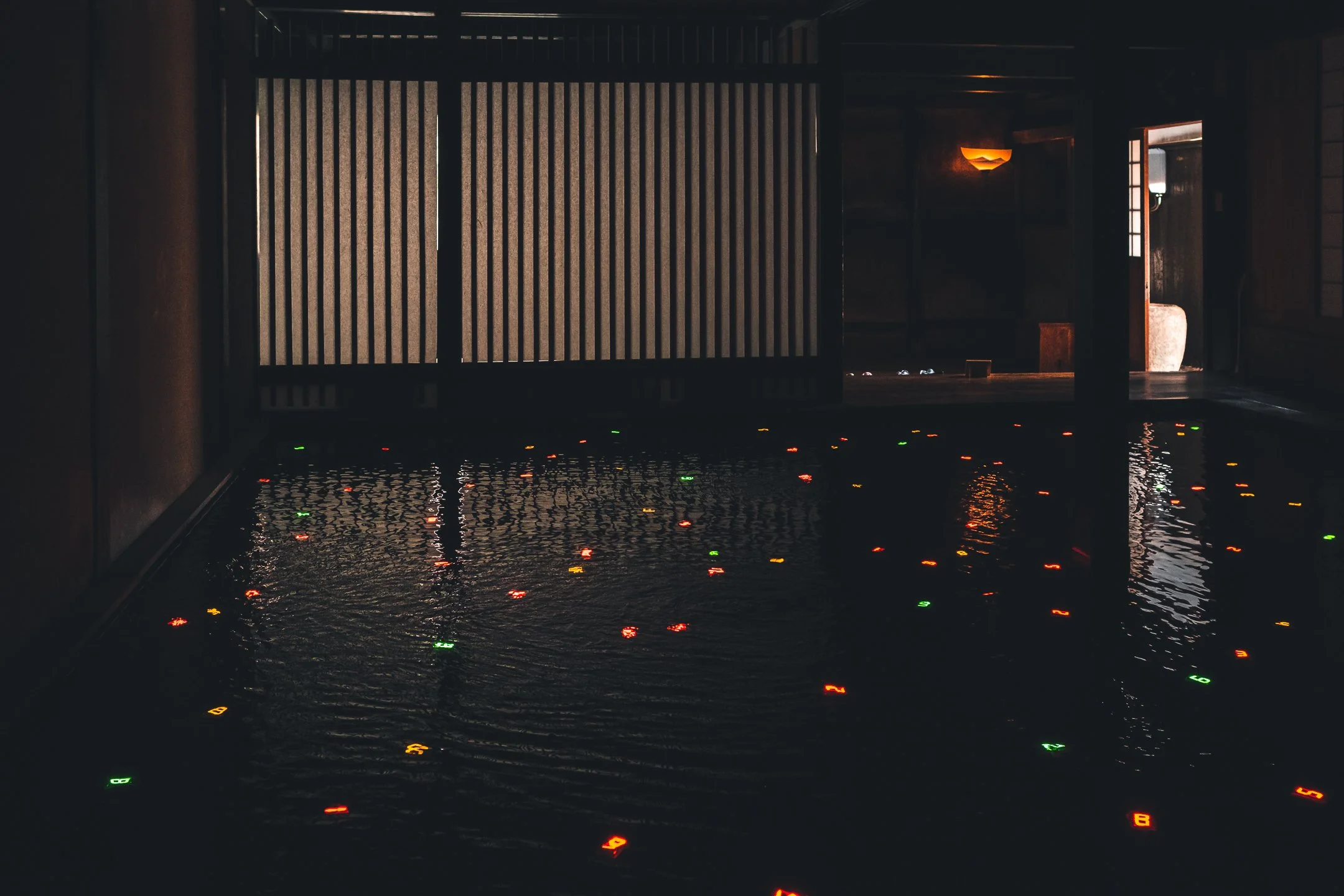
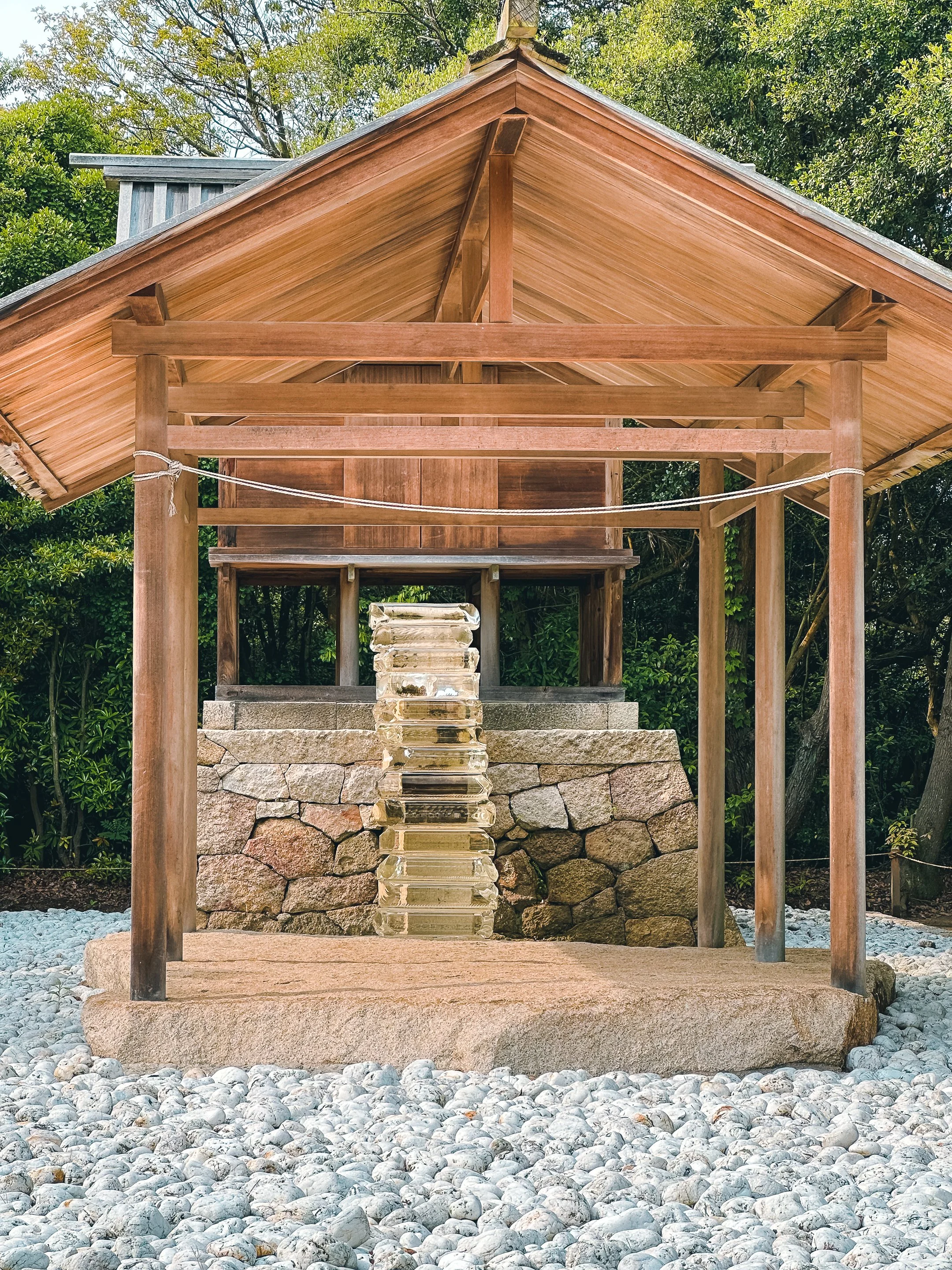
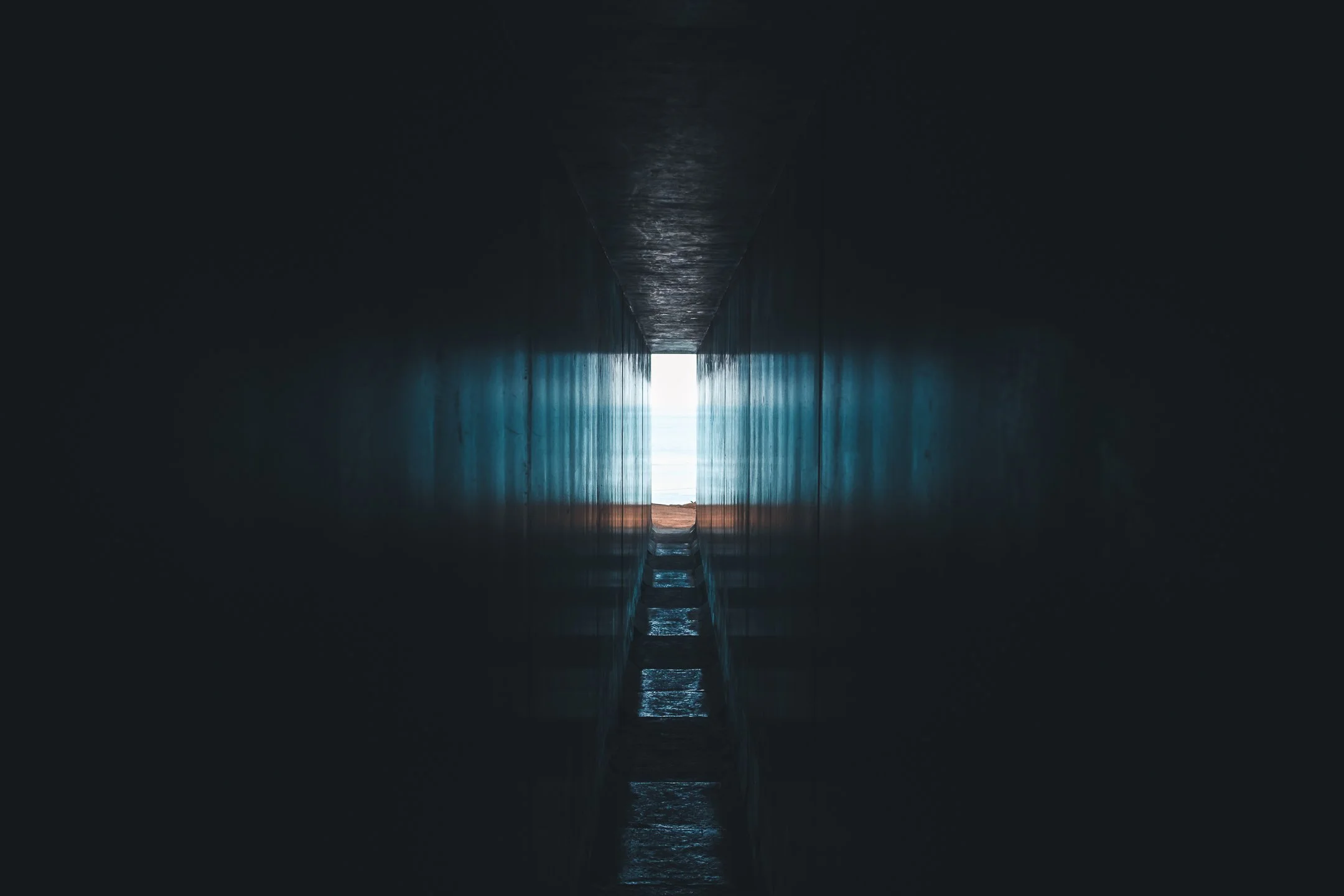
The Art House Project is a series of, so far, 7 traditional houses that contain, or more accurately, are themselves turned into works of art to be appreciated by the public. You can obtain a multi-site ticket that grants you access to 6 of the 7 art houses at Honmura Lounge & Archive. The 7th house, Kinza, is only accessible by prior reservation, since it is a solo 15-minute experience. Our favourite art house, Minamidera, is actually a new building that was created by, you guessed it, Takao Ando. It was made specifically to house a work by James Turrell (I told you we’d talk about him again!), who is a master of the Light and Space movement.
Satisfied that we had seen enough art for one day, we took the direct road that bisects Naoshima back to the Miyanoura area, and dropped our bikes off at the Ougiya Rent-a-Cycle garage. Intent on enjoying our lovely villa for the remainder of the evening, we grabbed some beverages from 7-11, as well as a few ingredients from the nearby co-op supermarket, and took advantage of our in-suite kitchen to make supper.
Teshima
A new day, a new art island! After packing up and checking out of our guesthouse, we made our way to Mianoura Port with plenty of time to spare for our 9:20 departure. The high-speed boat took us to Ieura Ferry Port in about 20 minutes. Be careful: there are only a handful of departures between Naoshima and Teshima each day, so give yourself lots of time to account for delays.

Time to wave goodbye to Naoshima!
Once on Teshima, we rented our e-bikes from Setouchi Karen. We paid the ¥1,800 daily rate per bike, and they happily held on to our baggage for free, since we wouldn’t be staying overnight. After giving us a quick run down about the bikes, we were off!
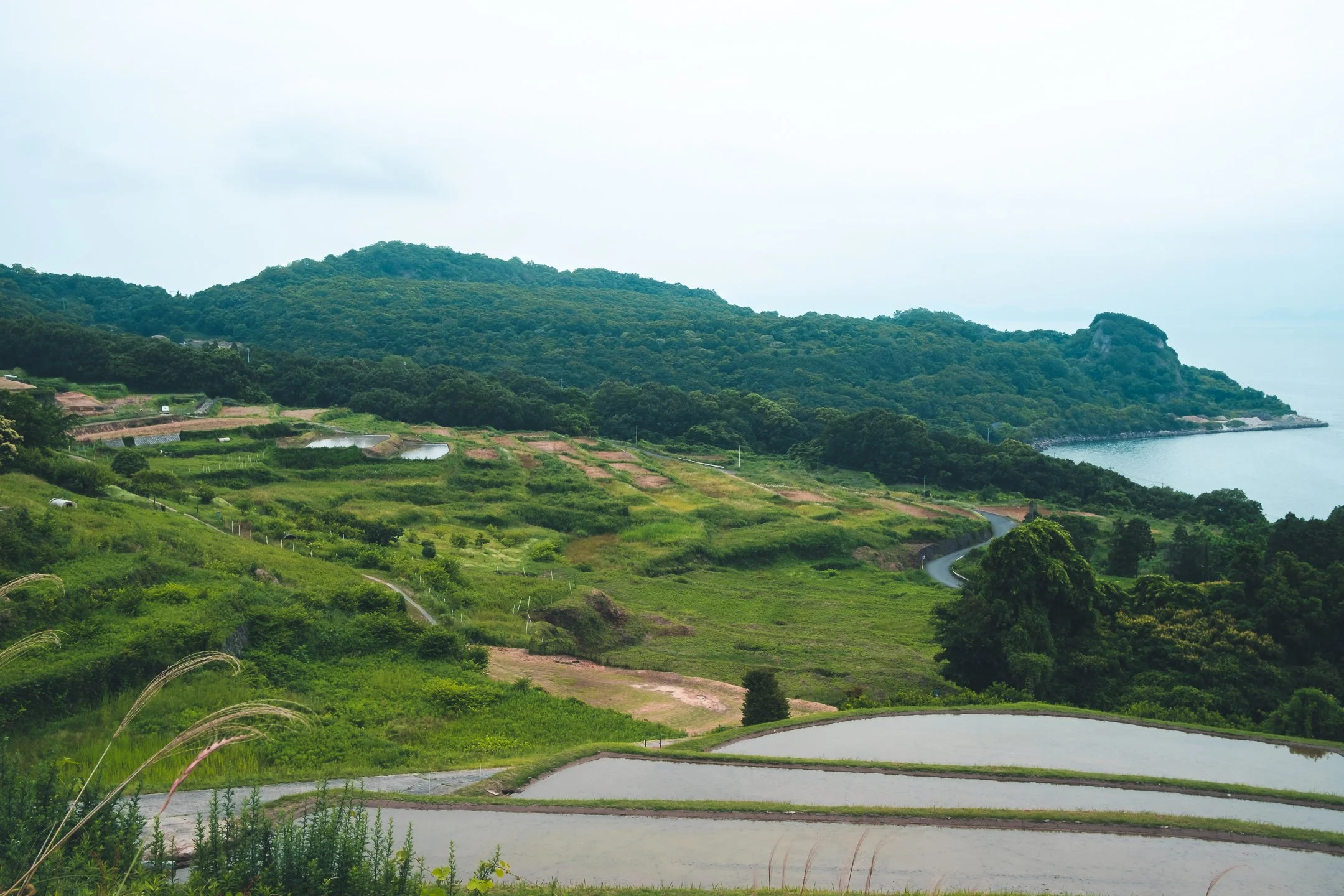
There are comparatively fewer art exhibits on Teshima, but we found the artwork on this island to be quite compelling and certainly worth the trip. Additionally, Teshima as a destination in itself is a super quaint, lovely place, and you can tell the residents take great pride in their local produce. Flooded rice terraces produce beautiful vistas, and shops boast products made with locally grown fruits: strawberries, olives, lemons, and other varieties of citrus.
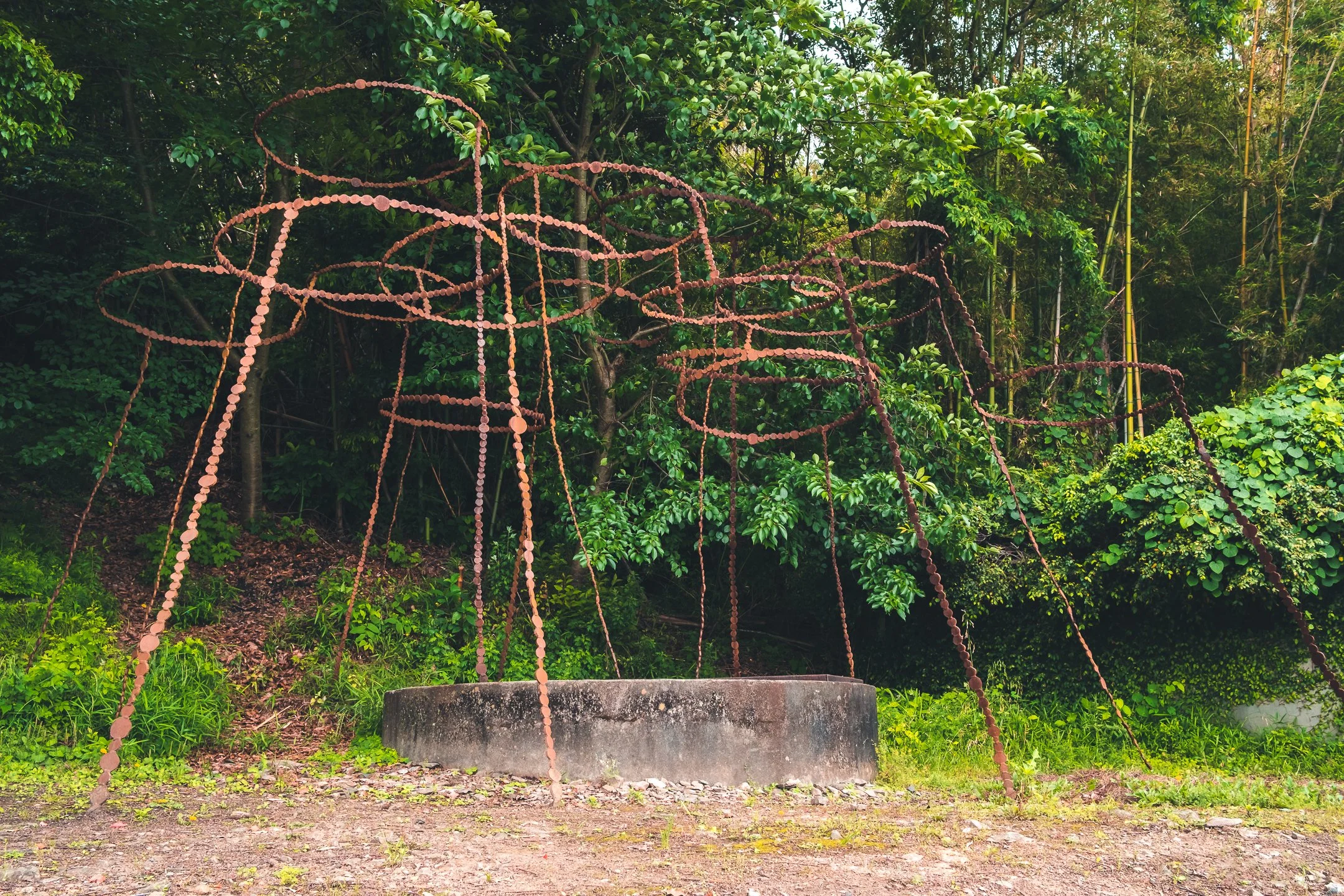
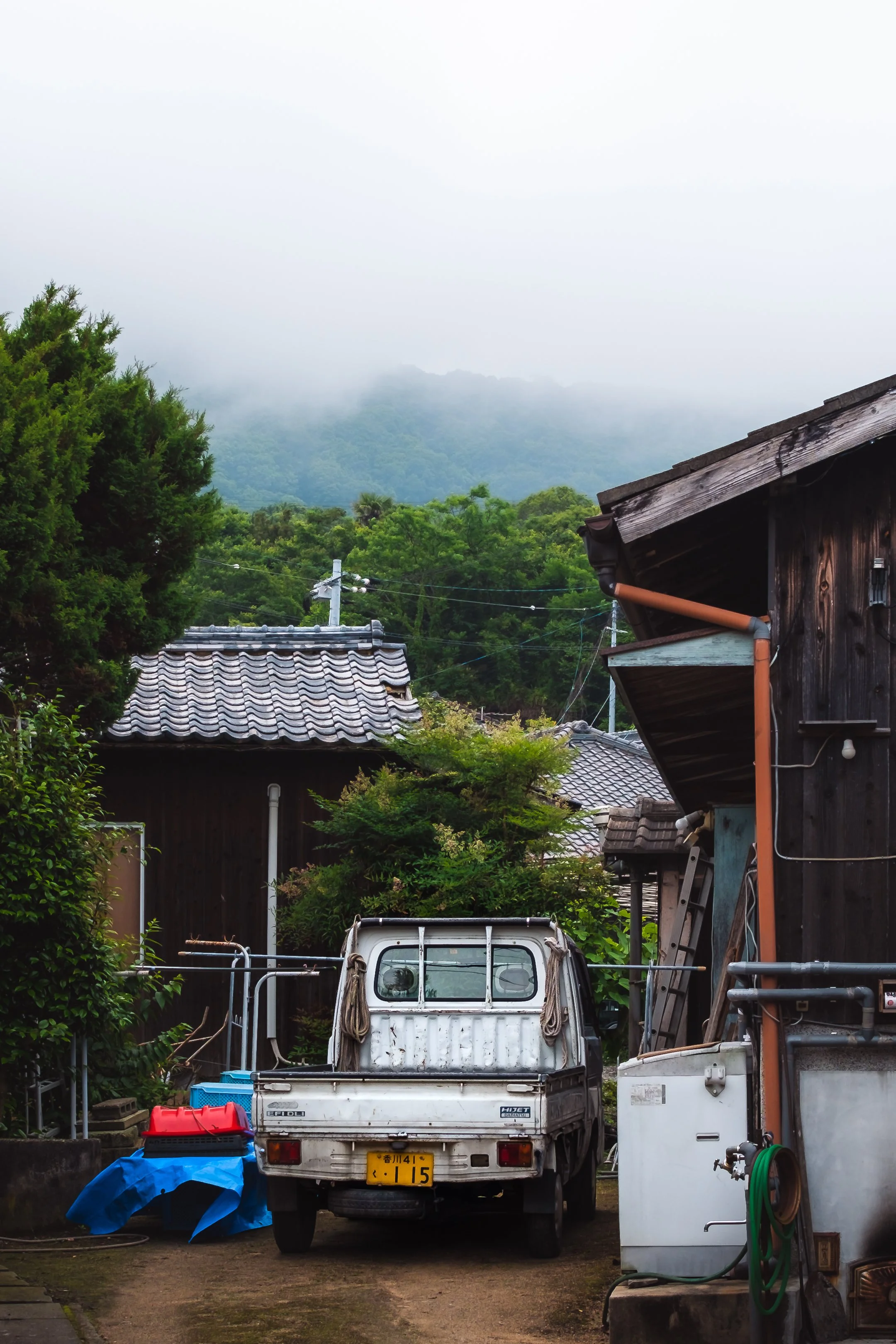
We made our way to the first museum, stopping on the way to admire Particles in the Air by Noe Aoki, and the morning mist that blanketed the surrounding mountains.
Teshima Art Museum
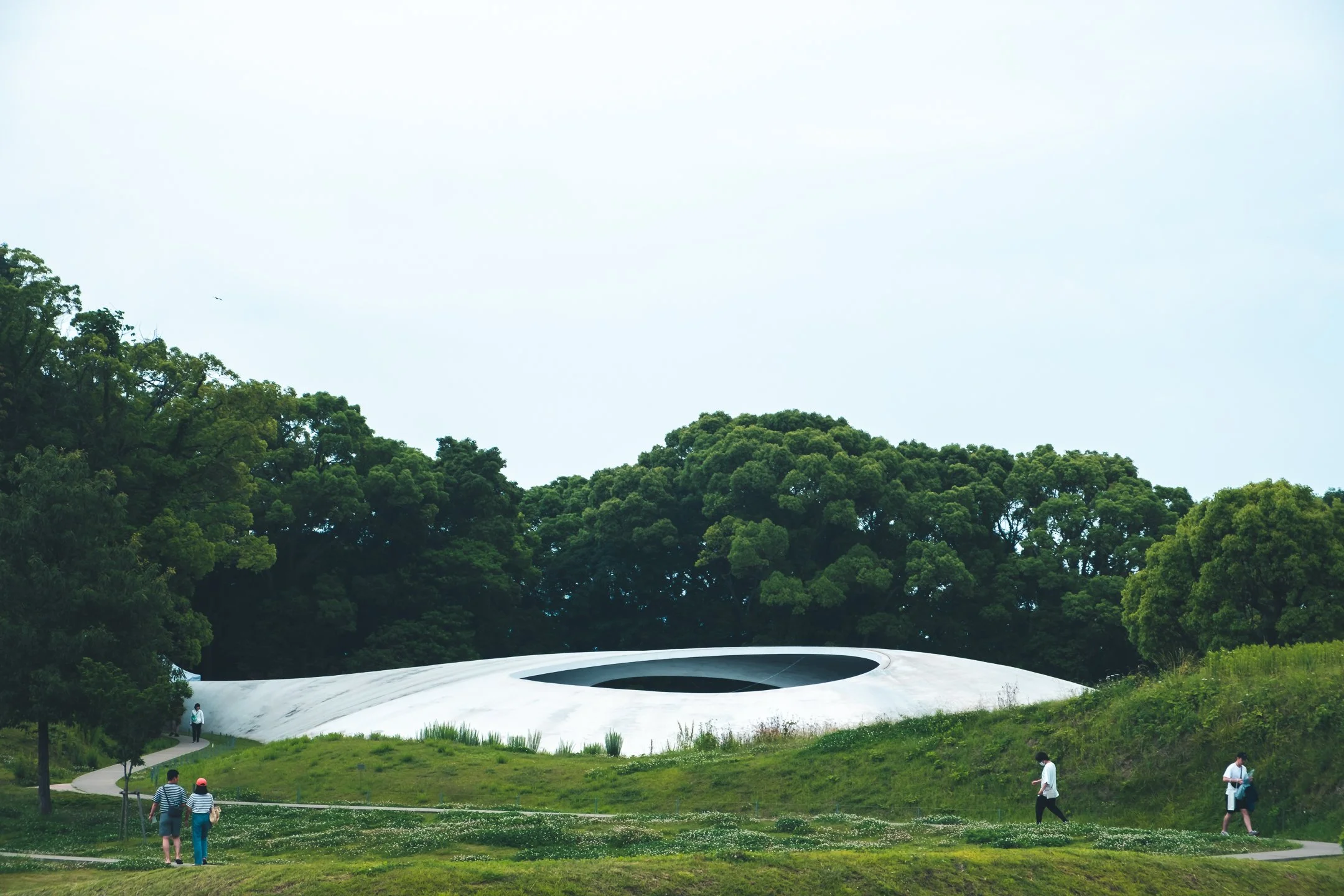
Teshima Art Museum consists of one spectacular exhibit, Matrix, by artist Rei Naito. Tickets must be purchased beforehand, at least the day before you visit. The museum sits on a hill among cascading rice terraces, and there are many viewpoints around the museum to admire both the beauty of the natural fields, as well as the stunning museum architecture. Apart from the main building, there is a cafe and a shop. I won’t spoil anything about the inside of the museum; it is something you need to experience for yourself.
Karatohama
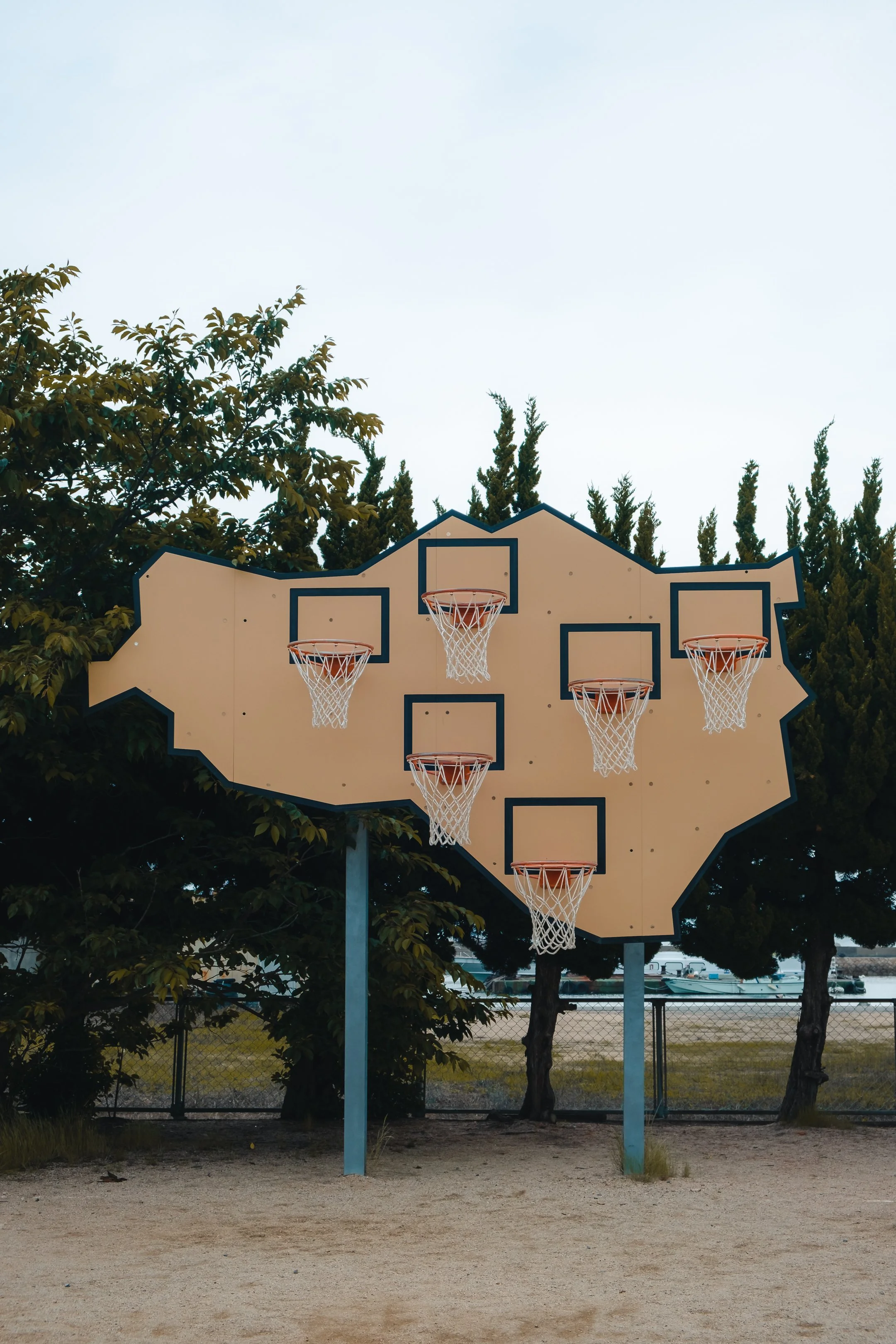
After leaving Teshima Art Museum, we made our way to the Karatohama area on eastern Teshima. We stopped at the playful No one wins – Multibasket by Llobet & Pons, where we spent more time than I care to admit playing made-up games of basketball (I lost.). Then, we made our way to Les Archives du Coeur by Christian Boltanski, which is an archive of heartbeats from around the world. There is an entry fee, but no need to make advance reservations. The building contains an exhibit, as well as a room with computers where you can search for and listen to archived heartbeats. For an additional fee, you can record your own heartbeat in their recording studio to add to the collection, and you will receive a CD booklet of the recording.
Teshima Yokoo House
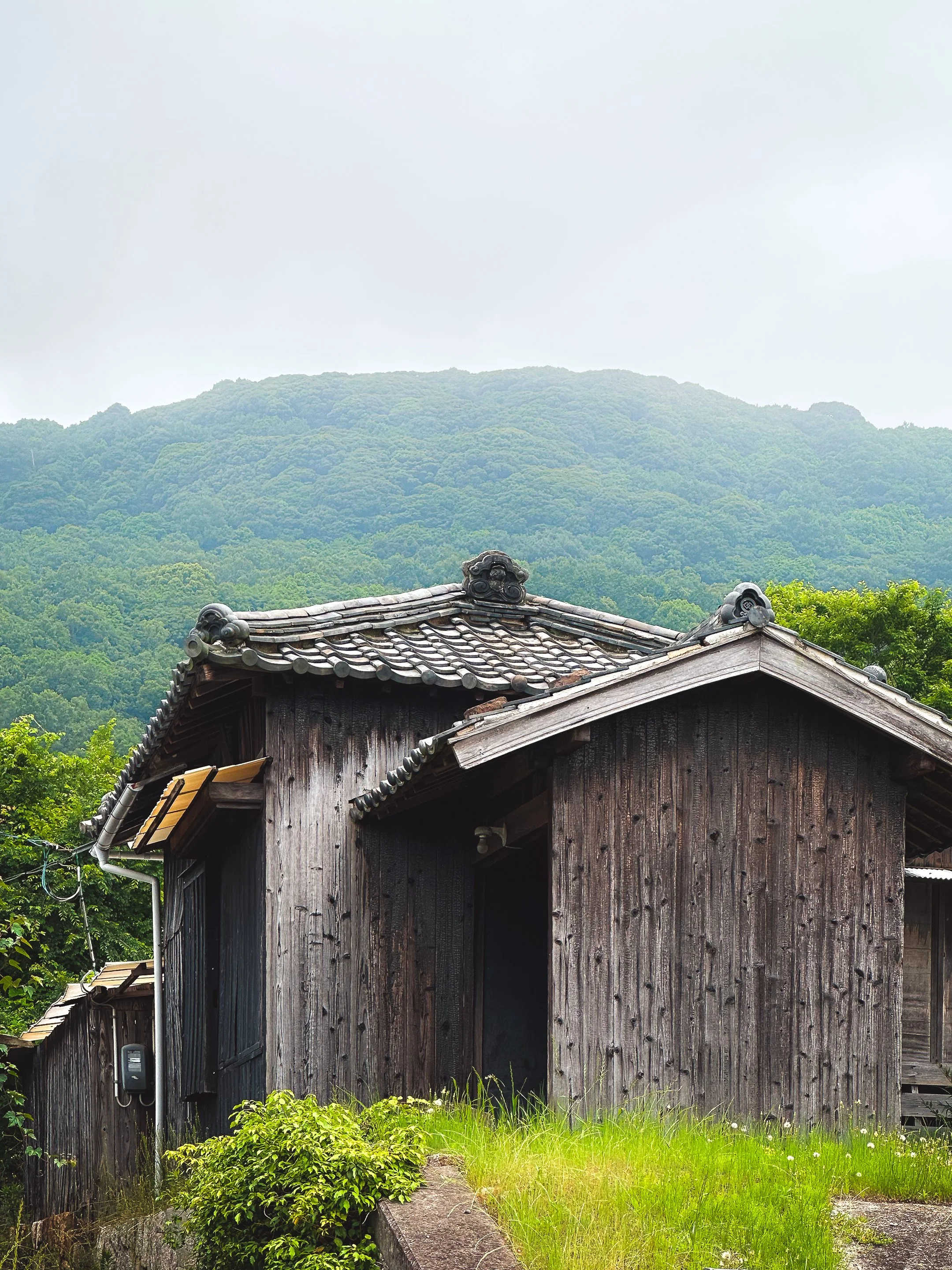
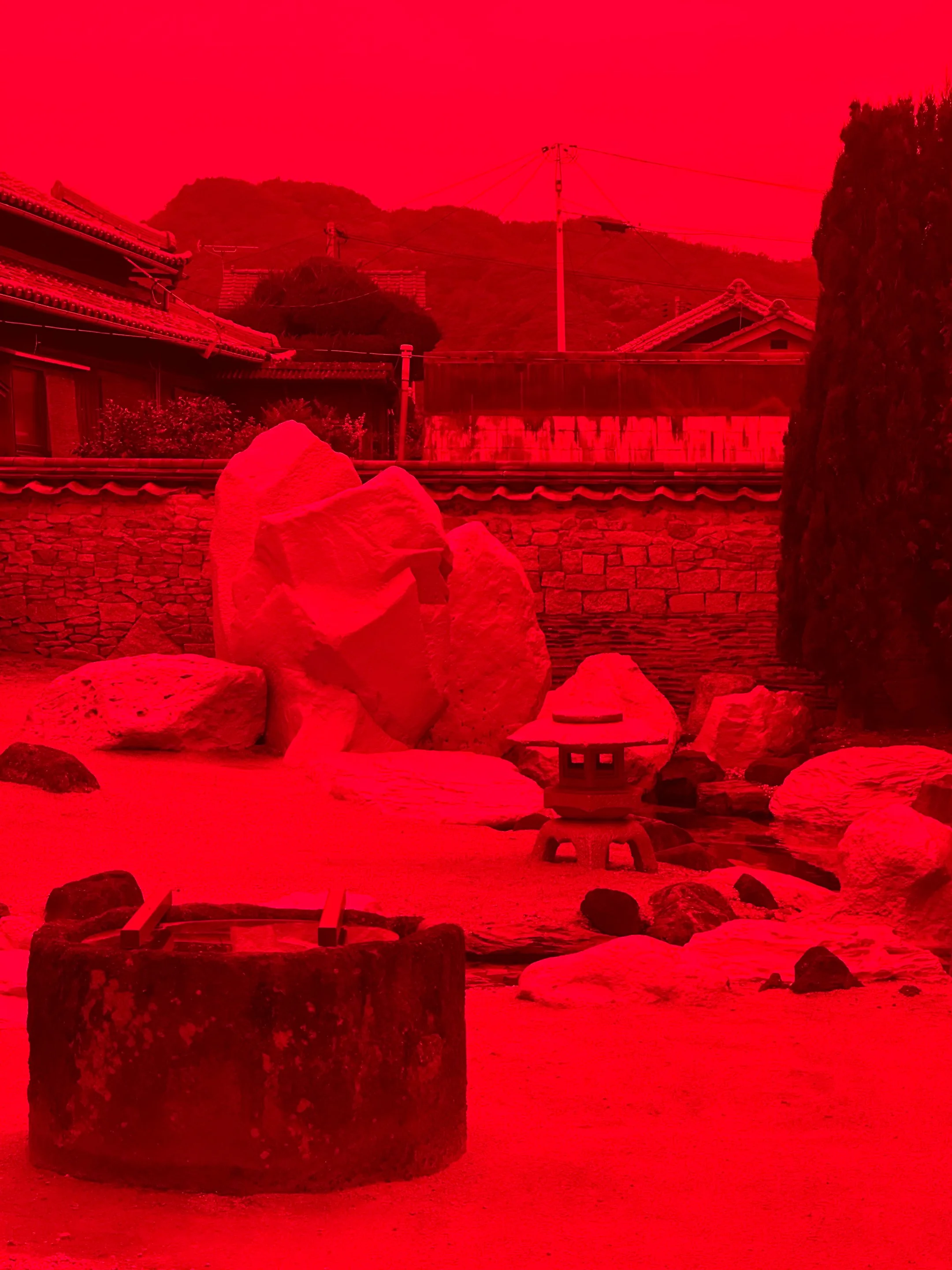
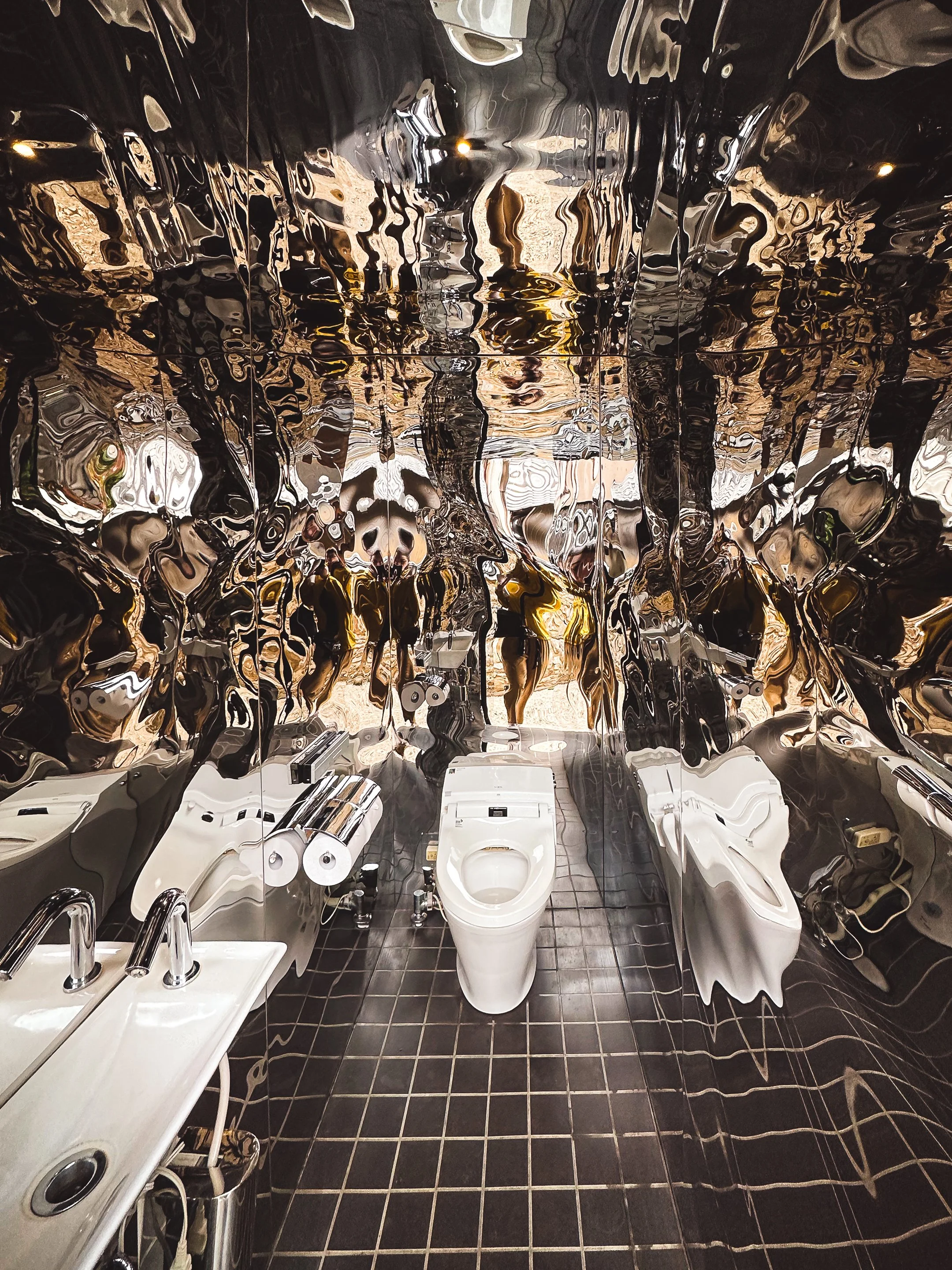
Having just listened to many strangers’ heartbeats, we set off once more on our bikes to head back to the Ieura area for lunch, and to visit our last stop, the Teshima Yokoo House. It is located on the grounds of an old house that was renovated for the purposes of this exhibit, and has three areas: the main house, the warehouse, and the outhouse. There is a fee to enter, but no need to make prior reservations. You start by viewing the garden through a red pane of glass, and I won’t spoil the view from inside. I will say, though, that in the outhouse is an actual, usable toilet (a Toto Washlet, of course), and it’s pretty wild, as you can see.
Departure
Since we had a ferry to catch for the next leg of our journey, this was the end of our time on Naoshima and Teshima. There are some art exhibits on both islands that we didn’t get to see, due to closures or time constraints, but we saw the bulk of what they had to offer and couldn’t have been happier with our time there. If you’re interested in other exhibits that we may not have mentioned here, refer to the Art Setouchi website.
Since our journey continued on the island of Shikoku, we took the ferry from Teshima’s Ieura Port to Takamatsu. If you are going back to the main island, Honshu, there should also be direct ferries or passenger boats to Uno port. Refer to the Teshima Tourism Navi site.
Finally, if you’re interested how I fared on this trip as a vegan, check out the next What I Ate post!