Vegan in Japan: What you should know
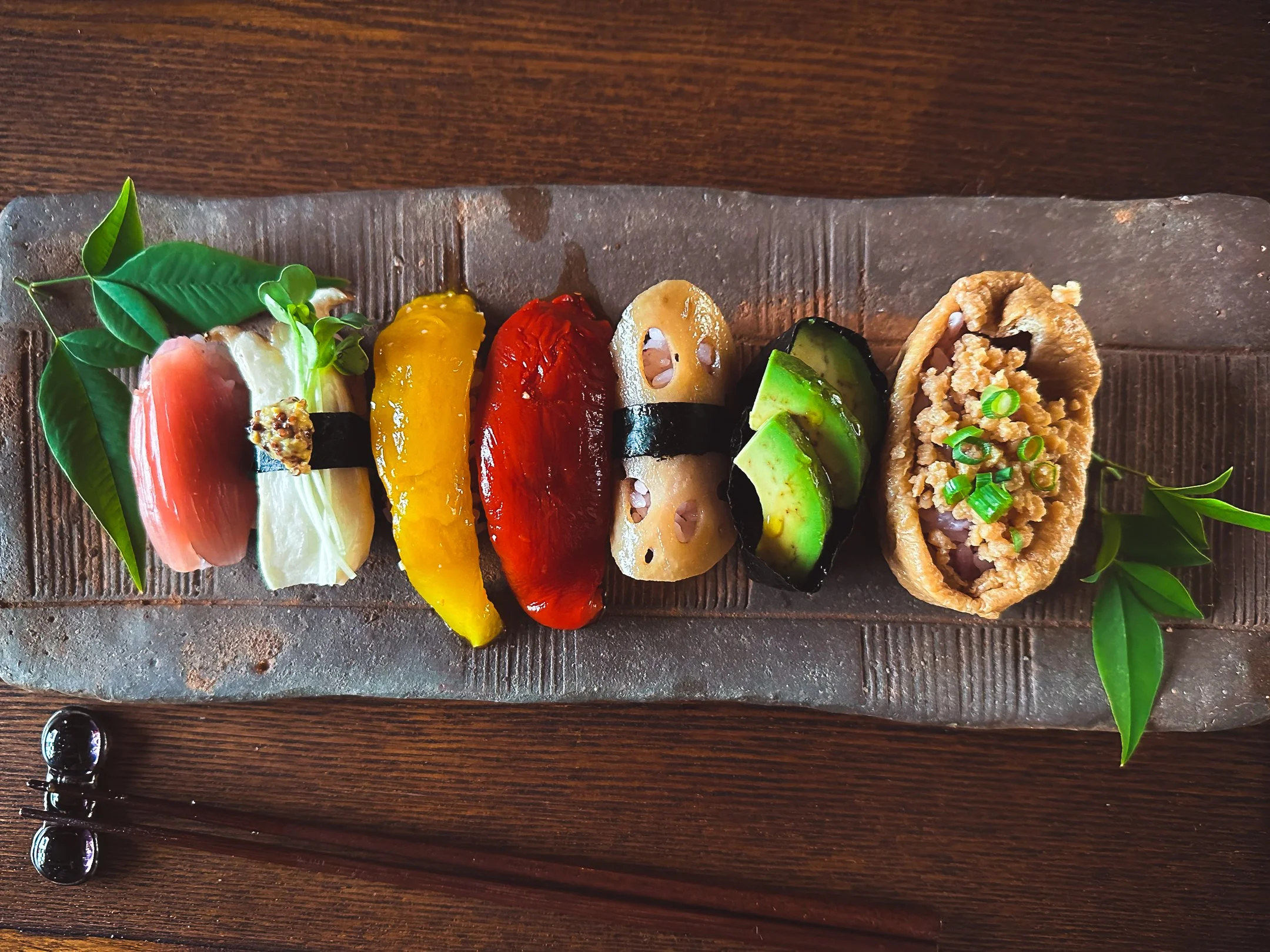
Japan has a reputation for being difficult to navigate as a vegan.
Often, when I come back from trips, people will ask me: “What did you eat?”, “Did you manage ok as a vegan?”, “Were there many options for you?”, “It must have been tough!”. The reputation isn’t completely unwarranted: many dishes that might seem vegan at a glance, like the humble miso soup, are rarely fully plant-based. However, I’ve found that, with a little research, eating vegan in Japan is not as difficult as it may seem: and I’ve had some of the best meals of my life in Japan. So, worry not, you won’t be missing out!
“Wait, miso soup isn’t vegan?”
There are a few things you need to be very careful about when in Japan if you’re vegan! The biggest culprit is dashi, the stock used as the base of countless Japanese dishes. Usually, dashi is made from bonito fish flakes called “katsuobushi”, which contributes to its umami taste. So, this rules out most soup-based dishes, like miso soup, ramen, soba, and udon, if they aren’t explicitly marked as being vegan. Even soupless dishes could contain dashi: vegetables may have been cooked in it, and for my vegetarian friends, tamagoyaki (rolled omelettes) usually contains katsuo dashi too!
There is an alternative dashi that does not contain animal products, and that is kombu dashi. This soup stock uses kombu kelp in place of katsuobushi and is usually vegan-friendly. Places that cater to vegans will use this instead of katsuo dashi!
Eating vegan in Japan isn’t just a matter of asking for a dashi swap, or to “hold the cheese”, though. First, because not every place will have kombu dashi available. But more generally, asking for substitutions in Japanese restaurants is not really a thing. Many, if not most establishments won’t be able to cater to substitutions or modifications in the same way a North American restaurant might.
Finally, you will want to keep in mind that, for some reason, Japan doesn’t require food labels to contain all ingredients, or even to list all allergens. It’s getting better, but you’ll still need to be vigilant when shopping at convenience stores, since using Google Translate might not be sufficient to check whether an item is vegan. For example, Inari sushi, which are tofu pockets stuffed with sushi rice, are not vegan in any of the major convenience stores, because they simmer their tofu pockets in katsuo dashi. However, none of them indicate this ingredient on the packaging. So, if you want to be safe, you will need to come prepared!
“Help me be prepared!”
If you’re vegan, this advice is old hat, but the Happy Cow app is your best friend. The website is free to use, but I highly recommend paying for the smartphone app. It’s a lifesaver to quickly check what vegan or vegan-friendly restaurants are nearby based on your current location, or you can plan ahead by searching the location of your next adventure.
Happy Cow prefers to only add vegan restaurants, or non-veg places that have made an effort to cater to vegans, so not all restaurants with vegan options will be featured there. I’ve found that searching on Google Maps for the word “vegan” (or in Japanese, ビーガン) will not only show vegan restaurants, but will also show restaurants where the word “vegan” is often featured in their reviews. So, that’s another way to find restaurant options when Happy Cow comes up empty.
Obviously, the large cities are going to have far more options than small towns. Tokyo’s vegan scene is world-class, and you won’t have any problem at all finding amazing food there. I will say that I’ve been pleasantly surprised by the availability of plant-based foods in out-there locations, though! For example, Teshima, a small island in Japan’s inland sea with a population of about a thousand people, has a fully vegan restaurant where I had a vegan sushi lunch set that nearly brought me to tears, it was so delicious.
I won’t say you’ll always be this lucky, though! There will be times you’ll have to rely on some Old Faithfuls. Here are a few recommendations to guarantee that you’ll never go hungry, even in the most remote of locations!
Muji
You might be familiar with Muji, a store that’s known mainly for their simple, high-quality clothing and stationery. When I say I was shocked to find a fully stocked grocery store inside of a Muji I visited in Tokyo, well, I was even more surprised to find they had a whole line of meatless single-serving curry packs. There are 6 varieties, but note that 4 contain dairy, so only 2 are vegan: the Eggplant & Sesame Curry, and the Red Bean & Tomato Curry. They are both absolutely delicious, though, and since they’re shelf stable I always had a pack or two in my bag before going anywhere I might struggle to find a vegan meal. They’re easily heated up in the microwave or in boiling water.

When all else fails, as long as you have a kettle and a convenience store rice pack, Muji curry will save the day!
Convenience Stores
Japanese convenience stores (or “conbini” in Japan) are magical places, as far as I’m concerned. Whether you need to take out cash, grab an extra pair of socks, fax a document, print out photos, or buy snacks and quick meals, the conbini’s got you covered. As a vegan, you will need to be careful though, since even the most innocent-seeming snack might have a hidden animal product or two. By far, the best resource I’ve found for finding vegan foods at convenience stores has been Is it Vegan? Japan’s convenience store guide. It saved my skin a couple of times when I needed to cobble together a meal in a pinch.
CoCo Ichibanya
Japan’s most popular curry house with over 1,000 locations, CoCo Ichi is a real lifesaver if you’re travelling Japan as a vegan. In 2016, they introduced a vegetarian/vegan friendly curry base to select restaurants. Now, it seems their veg options are at most locations, in my experience. As a large chain, they also have English menus available. Be careful, though! Make sure you order the “CoCoICHI vegetarian curry”, and not just “vegetable curry”, since vegetable curry still uses their regular, non-vegan curry base, just with vegetables mixed in. You’ll also have several toppings to choose from at an added cost, like garlic, spinach, corn, eggplant, and more.
When I was in Japan most recently, CoCo Ichi had soy “meat” cutlets, which were a fine way to add a bit of protein to the dish. Sadly, it seems this item was discontinued mid-2023. Thankfully, the vegan curry has remained!

CoCo Ichi’s vegan curry, featuring the now-discontinued soy meat cutlet.
MOS BURGER
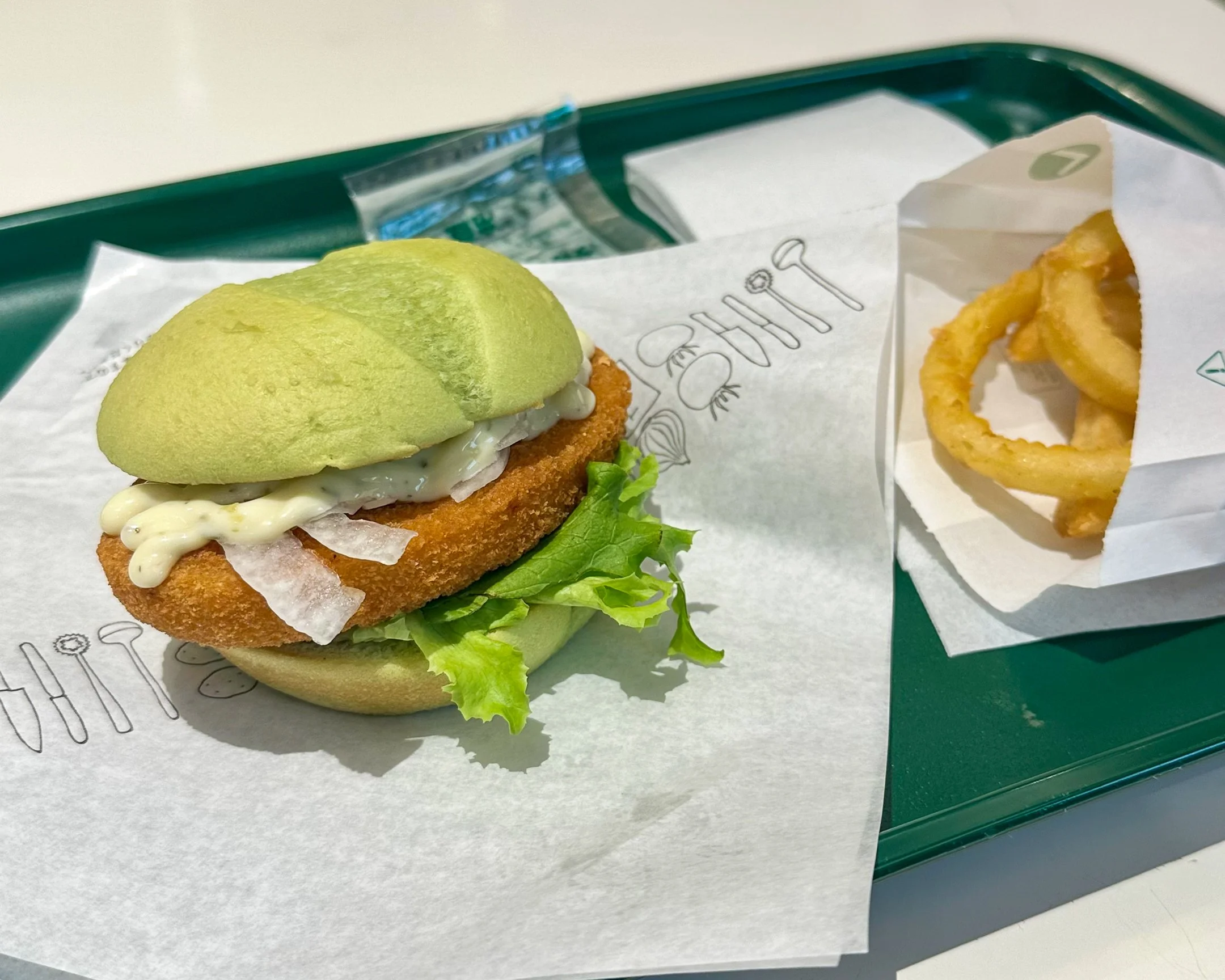
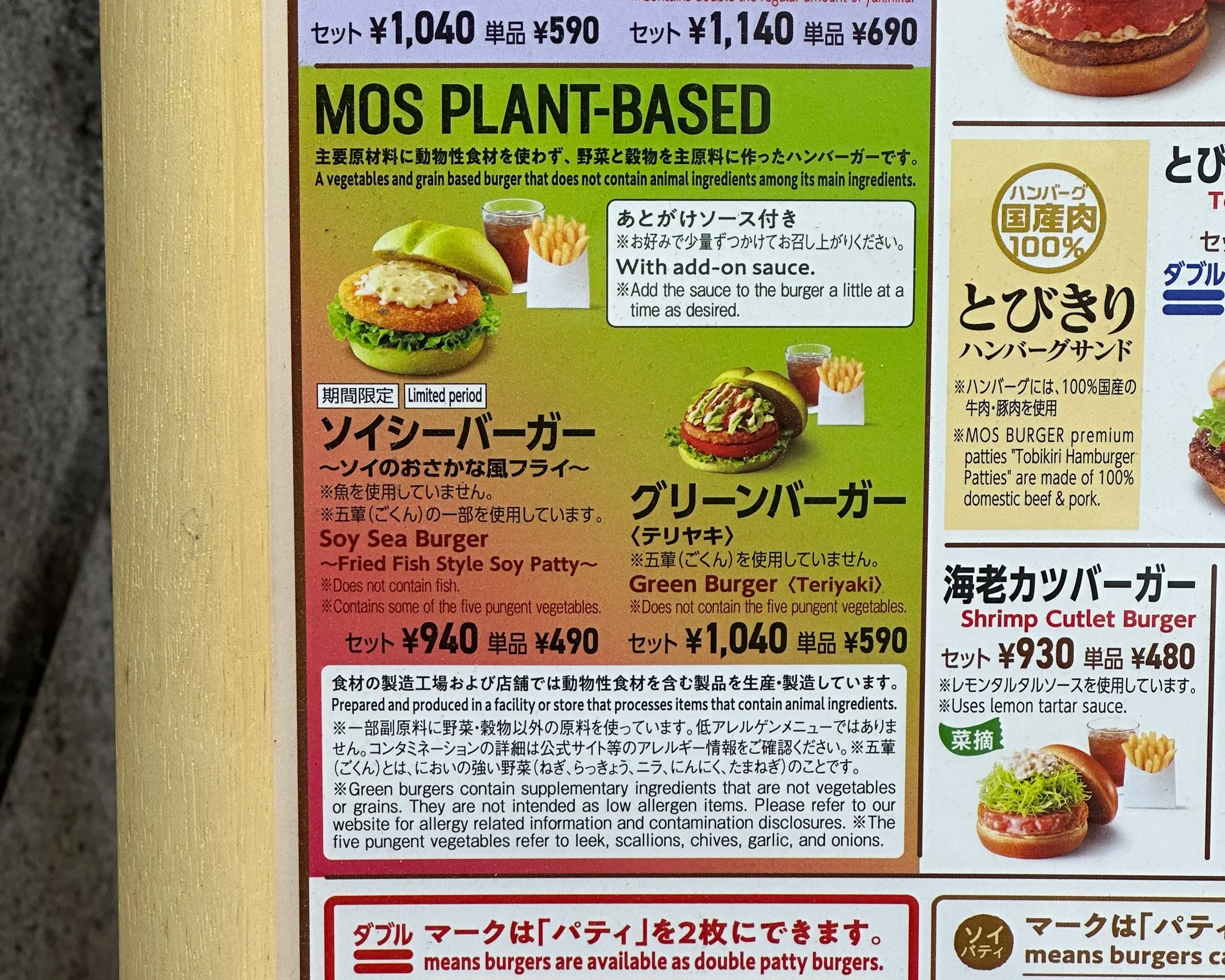
A popular Japanese fast food chain with over 1,300 locations, MOS BURGER had two vegan options last time I visited. Both come with an adorable light green bun. Their permanent veggie burger option is the “Green Burger”, which comes with a delicious self-serve mayo teriyaki sauce. Their limited edition item, the “Soy Sea Burger”, was their vegan answer to a fried fish burger, complete with a plant-based tartar sauce. Both were delicious, but sadly I have seen reports that the Soy Sea Burger is no longer available as of mid-2023.

“What about traditional inns?”
Some of the highlight cultural experiences of any trip to Japan involve staying at traditional lodgings, like Ryokan, Minshuku, and Shukubo. They often include meals as part of your stay, or have meals available at an extra cost. You’ll be delighted to know that there is no shortage of vegan-friendly accommodations in Japan. By far the most comprehensive collection of confirmed vegan-friendly inns is Is it Vegan? Japan’s. Personally, I can vouch for Hakone Kowakien Tenyu, Koshinzuka Inn, and Ekoin Temple Lodging.
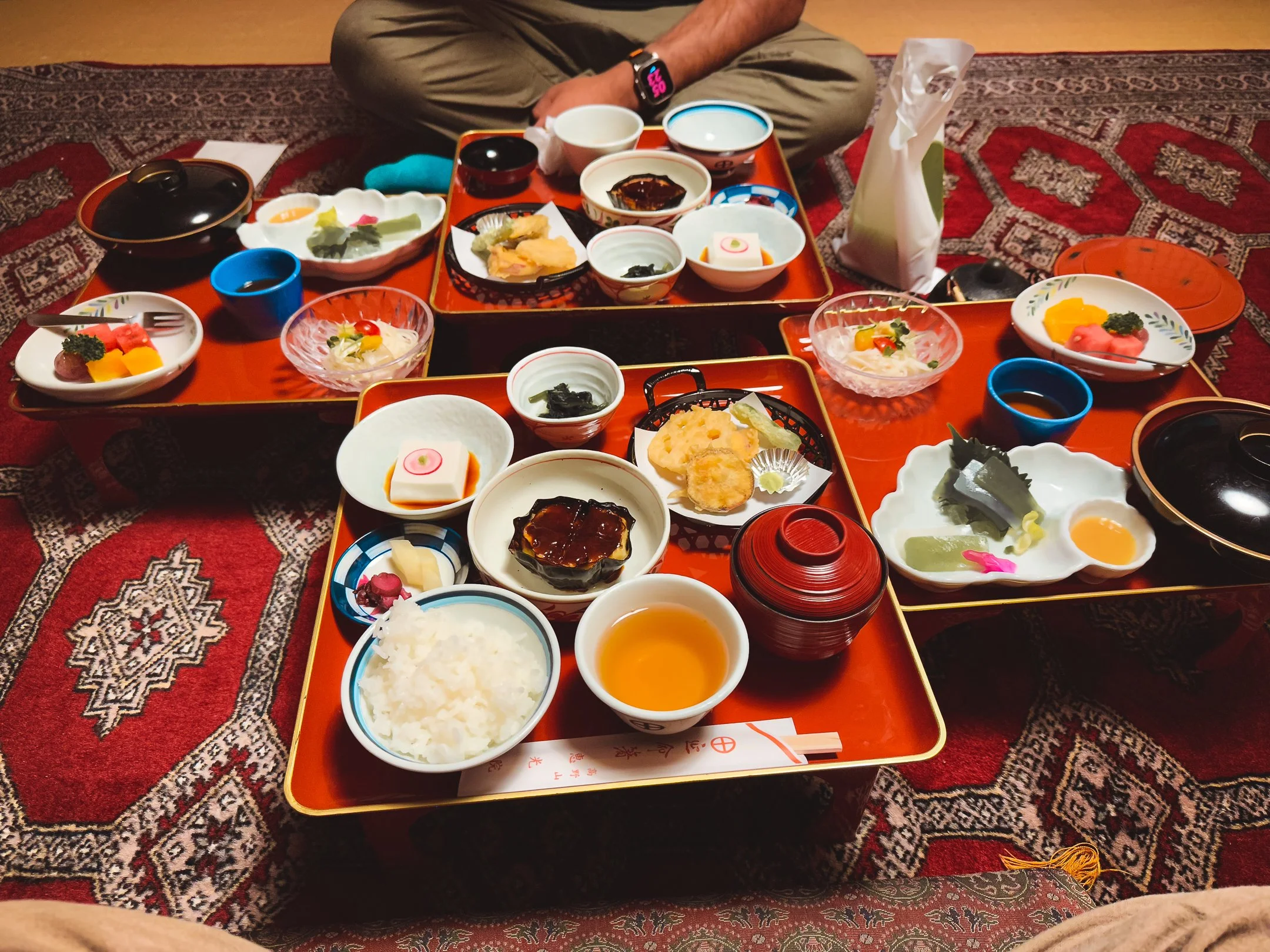
Ekoin Temple Lodging provided excellent buddhist-style plant-based meals.
With these tips and resources, I hope you will feel more confident in travelling Japan as a vegan, knowing you won’t need to miss out on delicious food, or traditional experiences! Happy travels!